
...
Knowledge

Contaminated process water is one of the most common causes of equipment fouling, inconsistent paper quality, and unplanned downtime in paper mills. Yet in many facilities, water filtration is treated as an afterthought rather than a core part of process design. The right bag filtration system, properly specified and maintained, keeps process water clean, protects downstream equipment, and supports consistent production output.

Why Process Water Quality Matters in Pulp Systems

Pulping generates large volumes of water carrying suspended solids, fibers, fines, fillers, and residual chemicals. In a recirculating system, these contaminants do not simply disappear. Without adequate bag filtration, they accumulate with every cycle and create problems across the entire production line.

Pumps, screens, heat exchangers, and valves become fouled by fiber buildup. Paper quality becomes harder to control as contaminated water introduces weak spots and uneven sheet formation. Chemical treatments become less effective as contaminants interfere with bleaching and other processes, increasing reagent consumption. And when equipment finally requires cleaning or repair, the cost in downtime and labor adds up quickly.

Sedimentation, flotation, and chemical clarification address a portion of the contamination load, but fine fibers and small particulate matter often remain in circulation. Industrial bag filters capture these residual solids efficiently, complementing existing treatment systems and preventing contamination from compounding over time.
Why Process Water Quality Matters in Pulp Systems

Where Bag Filtration Systems Are Used in Paper Mill Water Treatment

Bag filtration systems are effective across multiple stages of pulp water management, each with distinct requirements and objectives.

White water recycling

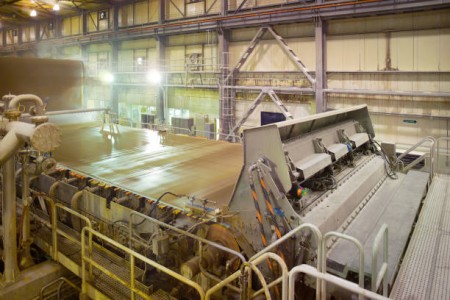
White water, the recirculated water from paper machines, contains fibers, fines, and fillers that must be removed before the water re-enters the process. Bag filters for white water recycling protect paper machines from fiber accumulation, support uniform sheet formation, and reduce wear on pumps and screens. Keeping white water clean at this stage has a direct impact on paper quality and machine reliability.

Process water clarification

During pulping and washing, residual lignin, fillers, and chemical additives remain in the water.  Before entering bleaching or downstream treatment stages, industrial bag filters remove the bulk of suspended solids. Cleaner feed water reduces interference with chemical reactions and improves overall process efficiency.

Effluent polishing

Treated discharge water can still contain fine fibers and suspended solids. Bag filtration for paper mill effluent provides a final polishing step. This helps mills meet environmental discharge regulations and allows safe water reuse for non-critical applications within the facility.

Cooling and utility water systems

Fibers and solids in utility water affect heat exchangers, cooling towers, and condensers. Process water bag filters installed in these systems maintain efficient heat transfer, reduce fouling and scaling, and lower maintenance frequency across utility infrastructure.

Bag Filtration Systems

How Bag Filtration Works and Why Housing Design Matters

Bag filtration systems remove suspended solids by passing process water through a filter bag housed in a purpose-built pressure vessel. The filter bag captures particles as water flows through, retaining solids while allowing clean water to continue downstream.

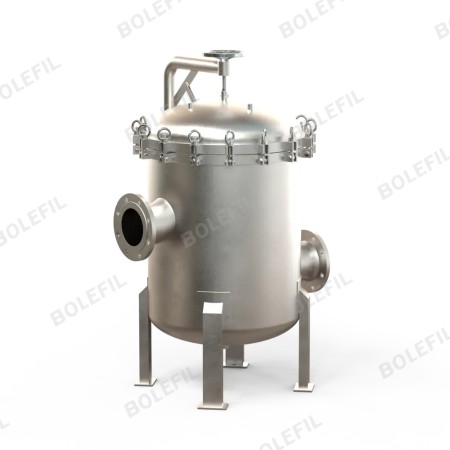
The bag filter housing is a key component in the system. A well-designed housing supports the filter under operating pressure, ensures even flow across the bag, and allows quick filter changes without stopping production.

Stainless steel bag filter housings are commonly used in paper mills because they are durable and compatible with pulp water chemistry. For high-volume systems, multi-bag housings or parallel installations help distribute the flow and provide sufficient capacity to handle large water volumes without causing excessive pressure drop.

Industrial bag filters in pulp water applications offer several key benefits. They hold a large amount of solids, reducing the need for frequent replacement and downtime. They are available in different micron ratings to target various particle sizes. And they are compatible with the chemicals and abrasive fibers present in the water.

Selecting the Right Bag Filter Housing and Filter Configuration

Every paper mill operates differently, and bag filtration system selection should reflect the specific demands of each application. Several factors determine the right configuration.

Micron rating determines which particle sizes are captured. Coarser ratings are appropriate for early-stage filtration where large fiber removal is the priority. Finer ratings are used for polishing stages where water clarity requirements are more stringent. Selecting the right rating balances filtration performance against filter service life.

Filter material must withstand the chemical environment of the process. Polypropylene (PP) and polyester (PES) are widely used in pulp water bag filtration due to their resistance to chemical additives and abrasive fibers. Confirming compatibility with the specific chemicals used in your process is an important step in filter selection.

Flow capacity must match the volume of water the system handles. Undersized bag filter housings result in excessive pressure drop and frequent filter loading. For large-scale operations, multi-bag housings or parallel installations provide the capacity needed to maintain stable flow without interruption.

Maintenance accessibility affects how quickly filter changes can be completed and how much labor is involved. Housings that allow fast bag replacement with minimal tools reduce the time and effort associated with routine maintenance, supporting continuous production schedules.

For facilities looking to optimize further, differential pressure monitoring enables proactive replacement scheduling, and modular bag filter housing designs allow capacity to be expanded as production grows.

Multi Bag Filter Housings

Specifying a Bag Filtration System for Your Operation

Every water treatment system is different, and a bag filtration setup that performs well in one mill may be undersized or mismatched in another. Specifying the right system from the start prevents performance issues and avoids costly retrofits.

Key variables to evaluate include:

  • Water source and contamination profile (fiber load, chemical content, suspended solids concentration)
  • Target water quality at each stage of the process
  • System flow rate and operating pressure
  • Temperature range
  • Process format (continuous recirculation vs. batch)
  • Discharge or reuse requirements

These parameters determine filter media selection, micron rating, bag filter housing configuration, and whether a single-stage or staged bag filtration approach is needed. A high-volume white water system with heavy fiber loading will require a very different setup than an effluent polishing application with lower contamination levels.

Getting the specification right upfront ensures consistent performance, appropriate filter service life, and a bag filtration system that supports rather than constrains your production operation.

Conclusion

Clean process water is not a secondary concern in paper production. It directly affects paper quality, equipment reliability, chemical efficiency, and environmental compliance. Industrial bag filters installed in properly designed filter housings provide a reliable, high-capacity solution for managing the fiber loads, suspended solids, and fine particulate matter that recirculating pulp water systems generate.

BOLEFIL supplies bag filters, stainless steel bag filter housings, and related filtration products for pulp water treatment and industrial process water applications. Get in touch with our team

relevant products

Subscribe to our blog newsletter

Get the best, coolest and latest delivered to your inbox each week

Have Questions?