Knowledge

In a liquid-cooled data center, the CDU pump has to provide enough pressure to move coolant through the entire TCS. CDU filter pressure drop is one part of this pressure balance and needs to be checked at the required flow rate.

In a Thermal Control System (TCS), the filter is one of several components that adds resistance to coolant flow. The pump must provide enough pressure to overcome the combined pressure losses while maintaining the required flow through the system.

CDU filter selection also needs to consider pressure drop at the required flow rate. The pressure-drop budget shows how much of the available pressure can be used by the filter while still leaving operating margin for the rest of the TCS.

What Is a CDU Filter Pressure-Drop Budget?

When looking at the pressure drop in a TCS, the filter is considered along with the other components in the loop.

A simplified pressure balance is:

ΔP Pump ≥ ΔP Filter + ΔP Heat Exchanger + ΔP Piping + ΔP Valves and Fittings + ΔP Other Components

The total pressure drop changes with the operating conditions, especially flow rate. As flow rate increases, the pressure drop through the system also increases. The CDU pump therefore needs enough available pressure at the required flow rate to overcome these losses.

The filter is only one part of this pressure balance, but it should be included when evaluating the actual operating condition of the CDU.


What Is a CDU Filter Pressure-Drop Budget

Pressure Drop in AI Data Center Liquid Cooling

AI servers and other high-density computing systems are driving greater adoption of liquid cooling in data centers. In these systems, CDUs and TCS loops handle coolant circulation between the facility and IT equipment.

As flow rates increase, pressure losses through the CDU and the rest of the TCS become more important to the system’s hydraulic performance.

When selecting a CDU filter, the required flow rate and filtration level need to be considered together with the coolant being used and the pressure drop the system can accommodate.

Why CDU Filter Pressure Drop Matters

The filter pressure drop adds to the pressure losses already present in the TCS. If the filter consumes too much of the available pump pressure, less pressure remains for the rest of the TCS.

This is particularly important in high-flow liquid cooling systems used for applications such as AI server cooling.

Schneider Electric notes that the filter adds pressure drop that the pump must overcome and that CDU ratings should be reviewed together with the configuration and conditions under which they were tested. A CDU tested without its filter, for example, may show a different available TCS pump head than the same system operating with the filter installed.

For this reason, filter pressure drop should be considered as part of the complete TCS pressure balance rather than as an isolated filter specification.

What Affects CDU Filter Pressure Drop?

The pressure drop of a CDU filter can change under different operating conditions.

Flow Rate

Flow rate has a direct effect on filter pressure drop. The reported ΔP should always be read at a specified flow rate, since the same filter can show different pressure-drop values as flow changes. A value of 1.2 psi at 500 GPM, for example, provides useful performance information only when the flow condition is known. When comparing filters, check the pressure-drop curve at the actual design flow.

Filter Area and Configuration

Filtration area, media or screen design, flow path, and filter configuration all affect resistance. In higher-flow applications, the available filtration area may need to be increased through a larger filter, additional elements, or a parallel arrangement. OCP guidance also notes that parallel filtration can reduce pressure drop compared with series arrangements.

Coolant Conditions

Coolant properties should also be taken into account when reviewing filter pressure drop. Filter data should therefore be reviewed under conditions representative of the actual TCS, particularly when water-glycol or other coolant mixtures are used.

Filter Loading

As contaminants accumulate, filter pressure drop can increase. The pressure-drop budget should consider both the clean condition and the expected operating condition. Differential pressure monitoring can help indicate filter loading and determine when maintenance may be needed.

What Affects CDU Filter Pressure Drop

CDU Filter Pressure-Drop Calculation Example

The following is a simplified example to show how a filter pressure-drop budget can be built. The actual values should come from the pump curve, system component data, and filter test data.

At the design point, assume a TCS flow rate of 500 GPM and a pump differential pressure of 12 psi.

Pressure losses elsewhere in the TCS are estimated as follows:

  • Heat exchanger: 3.0 psi
  • Piping and fittings: 2.0 psi
  • Manifold and connections: 1.5 psi
  • Other components: 1.0 psi

Total: 7.5 psi

Pump differential pressure at the design point: 12 psi

Pressure available for filter + operating margin: 4.5 psi

At 500 GPM, a filter with a clean pressure drop of 1.2 psi would bring the total system loss to 8.7 psi, leaving 3.3 psi of available margin.

Filter loading changes this balance. With the filter at 2.5 psi ΔP, total system pressure loss is 10 psi, with 2 psi remaining as operating margin.

This is why filter pressure drop should be considered beyond the clean condition. The expected operating condition and available pressure margin also need to be checked as part of the overall TCS design.

The actual allowable pressure drop will vary with the system and should not be treated as a fixed value for every CDU application.

How to Build the Pressure-Drop Budget

A practical review can start with four steps.

1. Determine the Required Flow

Start with the TCS design flow and the expected operating range.

The filter pressure drop should be checked at the actual design flow and, where relevant, at the highest expected operating flow.

2. Determine Available Pump Pressure

Look at the pump curve at the required flow rate. The differential pressure at this point is the value used in the calculation.

The pump’s maximum pressure rating is not used unless the system actually operates at that point.

3. Calculate Other System Losses

Pressure drop from the heat exchanger, piping, valves, fittings, manifolds, and other TCS components forms the remainder of the system-side losses.

4. Evaluate the Filter

Check the filter ΔP at the design flow against the pressure remaining after the other system losses.

The clean ΔP is only the starting point. The expected increase in ΔP during operation also needs to be allowed for.

This approach helps determine whether the selected filter provides sufficient flow capacity without using an excessive portion of the available pressure.

Low-Pressure-Drop CDU Filter Selection

A low-pressure-drop CDU filter should be evaluated as part of the overall filtration and hydraulic design.

The goal is not simply to choose the filter with the lowest ΔP. The filter still has to meet the particle-control and flow requirements of the TCS, while working with the selected coolant and the space available for installation and maintenance.

A filter curve showing low clean ΔP does not tell the whole story. The pressure drop at the design flow, the change in ΔP as the filter collects contaminants, and the pressure available in the TCS all matter when comparing filter options.

The final selection should balance filtration performance, pressure drop, filtration area, filter life, installation space, and maintenance requirements.

Low-Pressure-Drop CDU Filter Selection

Pressure Drop and Filter Maintenance

Differential pressure can provide a useful indication of filter condition.

Filter loading is reflected in the differential pressure across the filter. A rising ΔP over time can indicate that cleaning or element replacement is approaching, provided the flow rate has remained reasonably consistent.

However, differential pressure should be considered together with flow rate. A change in flow can also change the measured pressure drop, so ΔP should not be interpreted independently of operating conditions.

For a CDU, the relationship between flow rate, differential pressure, and filter condition provides a more useful basis for monitoring than a single pressure value.

Final Considerations

A CDU filter pressure-drop budget provides a practical way to connect filtration requirements with the hydraulic design of the TCS.

When selecting a filter, the pressure drop should be reviewed at the actual design flow and under representative coolant conditions. Clean filter performance is only one part of the evaluation. Expected filter loading, available pressure margin, installation space, and maintenance requirements also need to be considered.

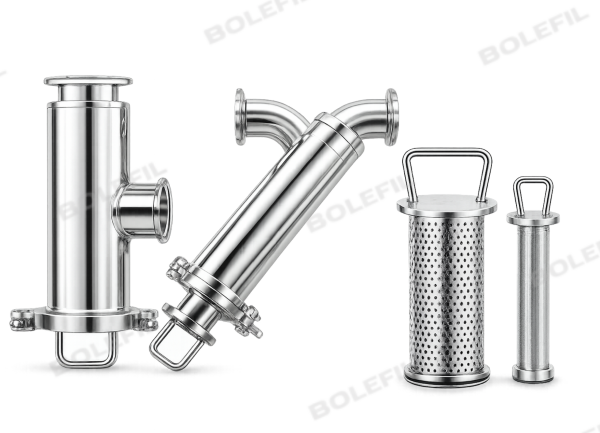
In AI data center liquid cooling and other TCS applications, the CDU filter is installed directly in the cooling loop, so its pressure drop and flow capacity become part of the overall system design. BOLEFIL filtration can be considered where flow rate, particle control, coolant conditions, pressure drop, and installation space all need to be accounted for in the system design.

relevant products

Subscribe to our blog newsletter

Get the best, coolest and latest delivered to your inbox each week

[newsletter_form]

Have Questions?

error: Content is protected !!