


Have you ever met the same problem that the filter cartridge before the RO system often has a short service time? This is a common situation often appearing infiltration field. Maybe you are also curious about why would this always happens. Then, you should not miss out on this blog.
In this article, we will figure out the reason for this problem and help you solve the problem. If you are disturbed by the short life problem of your filter cartridge, just read this blog carefully and you will find a solution.
Why your filter cartridge has a short service time?
If your filter cartridge has a short life, it would result that you should change your filter cartridge quite often, and the downtime and maintenance costs increase significantly.
As a manager of the plant, you would not like to see this thing happen all the time. But what’s on earth the reason for this problem? Here, we summarize some of the factors that lead to the short service life of filter cartridges.
- Unstable raw water quality;
- unqualified-filtration process, former carton media extractable;
- Microbial crazily grow in summer;
- Ultra-filtration membrane damaged;
- Overloaded flow rate capacity;
- Badcartridge filter quality;
We have analysed the samples that have short service time in actual usage. And from ponit1 to point5 are all objective factors, which have no relation to the filter cartridge itself. If all objective factors were excluded, the quality of the filter cartridge can be the only reason to blame.
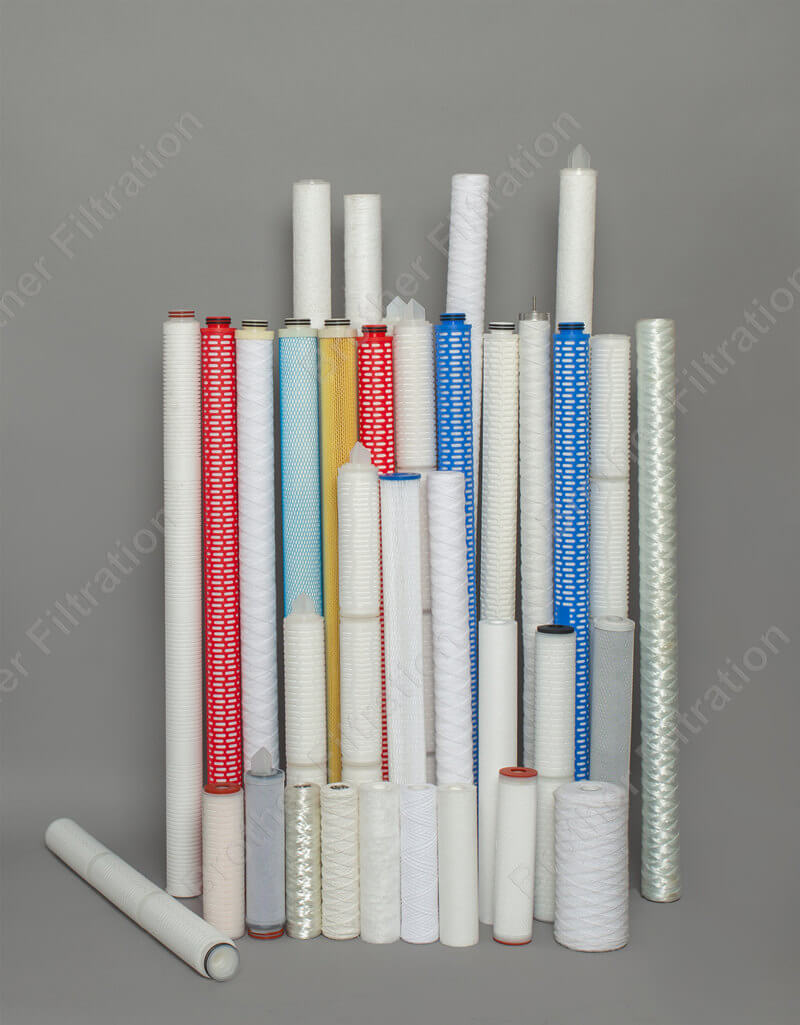
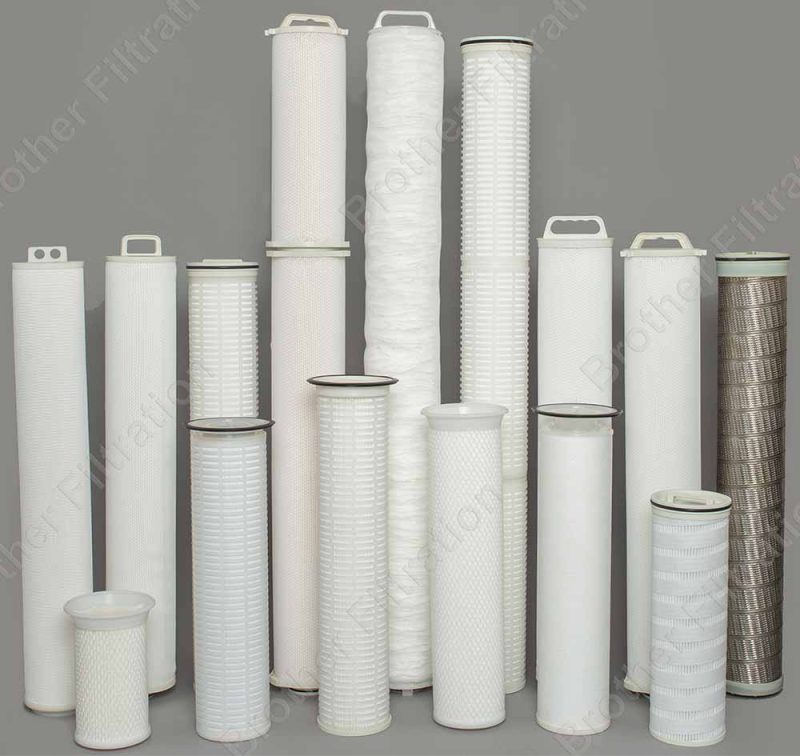
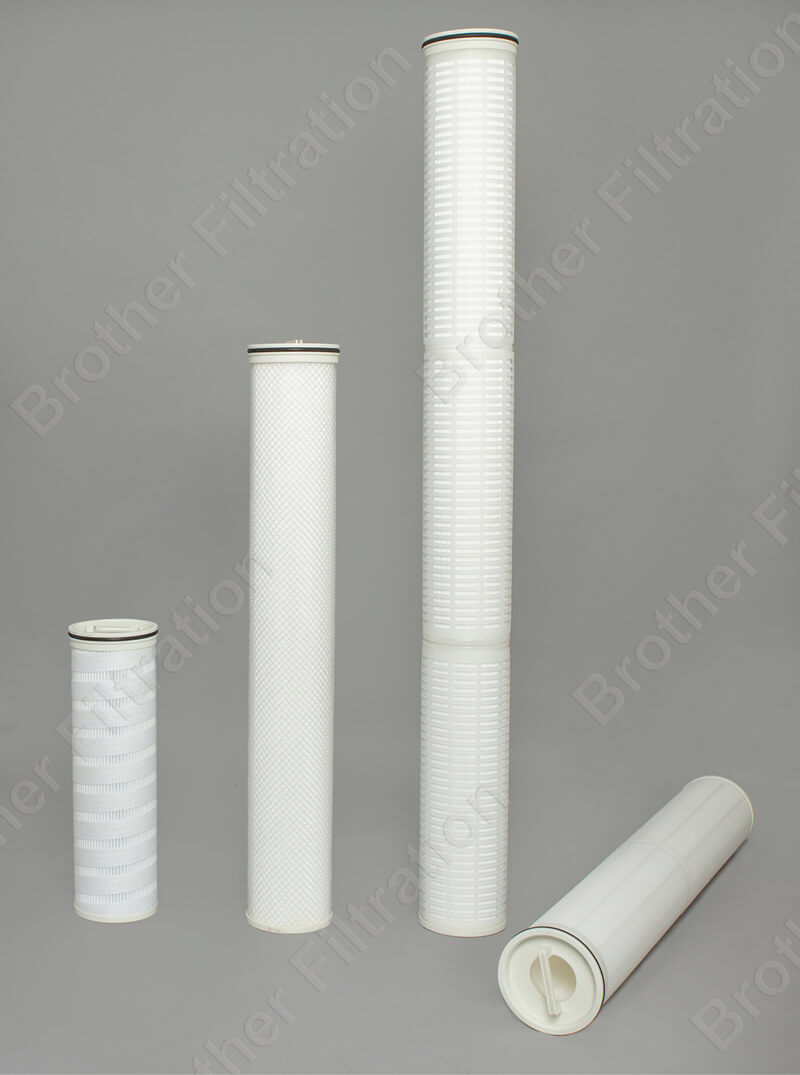
We would like to recommend our high-flow filter cartridges to you, they have high efficiency with a large filtration surface and high dirt-holding capacity, of course, longer service time.
Key Factors That Affect Water Filter Cartridge Lifespan
Understanding what shortens your filter cartridge life is the first step to fixing it. While we listed the six major causes earlier, let’s look more closely at each factor because diagnosing the right cause changes the solution entirely.
-
Unstable or poor raw water quality
If your source water has fluctuating turbidity, high sediment loads, or seasonal quality changes, your cartridge will load up far faster than its rated specification. A filter rated for 10 µm at 5 NTU will fail in days if your inlet water is running at 50 NTU after heavy rainfall. Install an inline turbidity meter upstream of the cartridge housing so you always know what you are feeding the filter.
-
Overloaded flow rate
Every cartridge filter has a maximum recommended flow rate, expressed in litres per minute or m³/hour. Running above this rate compresses the filter media, reduces effective filtration area, and dramatically shortens service life. Always verify that your pump output matches the filter housing’s rated flow range not just the housing capacity.
-
Microbial growth especially in summer
This is one of the most overlooked causes of cartridge filter short life, and it becomes a serious problem during warm months. When water temperatures rise above 20°C, bacteria and biofilm colonies proliferate rapidly inside the filter media and housing. The result is a cartridge that appears to be clogged long before its pressure differential would suggest it is loaded with particulate. Signs include slime on the cartridge outer surface, unusual odours, or a sudden drop in flow rate with no corresponding turbidity spike.
Solutions include: scheduled sanitisation of the housing, UV pre-treatment upstream, using cartridges with antimicrobial media, and more frequent change-outs during summer months.
-
Incorrect micron rating for the application
Selecting a filter that is too fine for the incoming water quality means it will blind off rapidly. If your source water carries particles between 50–100 µm, starting pre-filtration at 5 µm is counterproductive use a coarser pre-filter stage first, then step down to the fine rating before the RO membrane.
-
UF membrane damage upstream
When the UF membrane upstream of the cartridge filter is compromised or bypassed, large molecular-weight organics and colloids pass through to the cartridge stage. These sticky, gelatinous materials foul the filter media in a way that cannot be backwashed or removed the cartridge simply blocks. If you are consistently seeing rapid, unexplained blockages, inspect and integrity-test your UF membrane before replacing more cartridges.
-
Poor cartridge build quality
Weak inner cores collapse under high differential pressure. Soft outer netting deforms under inside-out flow. Poor thermal welding creates bypass pathways at the end cap or side seam. All of these reduce effective filtration life. A cartridge that appears intact on the outside can be passing unfiltered water internally leading to RO membrane fouling even when the cartridge “looks fine.”
What normally will happen to a poor-quality cartridge filter in daily operation and maintenance?

- Breakage
- Deformation
- Leakage
- Small Effective Filtration Area
Why do they happen?
Breakage normally happens to the cartridge filter with the out-inside flow direction. It is caused by the weak inner core and poor filter unit connection welding.
Deformation normally happens to cartridge filters with inside-out flow direction structure. It is caused by soft outer netting.
Leakage is caused by poor thermal welding of membrane side seam and membrane with end cap, especially in those factories automation production cannot be promised.
Not enough effective filtration area is caused by unreasonable membrane structure and pleat heights.
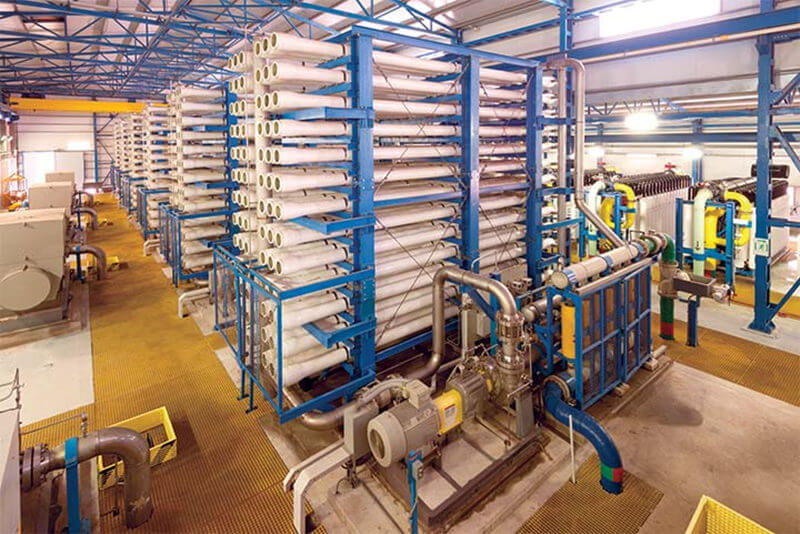
If we take the RO membrane as the heart of the body, the exquisite and expensive part of a water filtration system, then the cartridge filter is the keeper to make sure blood is pure. That is why a cartridge filter is an important and essential guard to the whole system.
When your cartridge filter only plays for a few days, that would be a catastrophe for your whole system. If you want to change this situation, all you need to do is send us your used filter cartridge for us to analyze. We will find out why and offer you a satisfied solution.
Benefits of using a high-quality filter cartridge
When you choose a high-quality and suitable filter cartridge for your system, you will easily find out that the efficiency could be largely improved and the maintenance costs can be decreased.
- Less down time
- Higher water quality
- Longer RO membrane life
How to Extend Your Filter Cartridge Life: 6 Practical Steps
Many plant operators accept short cartridge filter life as unavoidable. In most cases, it is not. Here is how to extend the service life of your cartridge filters without compromising filtration quality or risking your RO membrane.
Step 1: Add a coarse pre-filter stage
If you are running a single-stage cartridge filter before your RO membrane, install a coarser pre-filter upstream (e.g., a 25–50 µm depth filter before a 5–10 µm final filter). This two-stage approach spreads the dirt load across two cartridges and dramatically extends the life of the fine final filter. In many systems, this change alone reduces cartridge replacement frequency by 50–70%.
Step 2: Match the cartridge micron rating to your water quality
Have your inlet water tested for particle size distribution, turbidity, and SDI (Silt Density Index). Use that data to select the correct micron rating not the rating someone else used at a different site. A cartridge that is correctly rated for your actual water will always outlast one that is too fine.
Step 3: Control your flow rate
Run cartridge filters at 80% of their rated maximum flow. This simple step reduces media compression, maintains effective filtration area, and lowers the pressure differential that drives premature blinding. If your system regularly exceeds rated flow during peak demand, consider upsizing the housing or running parallel housings.
Step 4: Sanitise the housing regularly
Don’t just change the cartridge clean and sanitise the housing at every changeout. Biofilm, iron bacteria, and organic deposits inside the housing contaminate new cartridges immediately, cutting their effective life from the very first hour of use. A 30-minute soak with an approved sanitant between changeouts costs very little and makes a significant difference.
Step 5: Monitor pressure differential, not just time
Replacing cartridges on a fixed time schedule (e.g., “every 30 days”) ignores the actual loading state of the filter. In high-quality source-water periods, that cartridge may still have weeks of life left. In poor-quality periods, it may have been spent in five days. Install differential pressure gauges across the housing and change based on ΔP typically when the pressure drop exceeds 1.5–2.5 bar depending on the system design.
Step 6: Choose a cartridge with high dirt-holding capacity
Not all cartridges with the same micron rating hold the same amount of dirt. High-flow filter cartridges with large effective filtration areas and deep-gradient media structure hold significantly more particulate before reaching their end-of-life pressure differential. For pre-RO applications specifically, a cartridge with a high dirt-holding capacity (DHC) rating is one of the simplest and most cost-effective upgrades available.
How Long Should a Filter Cartridge Last? (Expected Lifespan by Application)
One of the most common questions plant managers ask is: How long should my filter cartridge last before the RO membrane? The honest answer depends on your application, your water source, and your operating conditions, but here are the standard benchmarks used across the industry.
| Application | Water Source | Expected Cartridge Life | Replacement Trigger |
| Municipal drinking water pre-filtration | Tap/city water | 3–6 months | Pressure differential > 2.5 bar |
| Industrial process water (light) | Softened or pre-treated | 4–8 weeks | Visible discolouration or flow drop |
| Food & beverage production | High-clarity source water | 2–6 weeks | Regulatory compliance schedule |
| Industrial process water (heavy) | River / borehole water | 1–3 weeks | Pressure differential > 1.5 bar |
| Pharmaceutical / Life Science | Purified or WFI water | 1–4 weeks | Integrity test failure |
| Cooling towers / Power generation | Hard or recirculated water | 2–4 weeks | Pressure differential > 2 bar |
| Marine/seawater desalination | Open seawater | 5–14 days | Turbidity spike or flow drop |
The most reliable indicator is always pressure differential (ΔP). When the pressure drop across the cartridge rises beyond your system’s design threshold, the filter is loaded and must be changed regardless of how much time has passed.
How Does Filtration Improve Product Shelf Life?
For customers in the food and beverage, pharmaceutical, and life science sectors, cartridge filter performance has a direct impact on product shelf life, not just equipment protection.
When pre-filtration before an RO or UF membrane is inadequate, whether due to a short-lived, low-quality cartridge or incorrect micron selection, residual particulate, microorganisms, and colloidal matter pass downstream into the final product water. In a beverage production line, this translates into:
- Elevated microbial counts that reduce product shelf life and increase the risk of spoilage
- Haze formation in clear beverages caused by colloidal silica or organic carryover
- Flavour and odour tainting from chloramine or iron breakthrough
- Shortened RO membrane life, leading to more frequent system downtime and higher maintenance costs across the entire production line
Proper cartridge filter selection matched to your water quality, with adequate dirt-holding capacity and verified integrity, ensures the water feeding your process is consistently clean. Clean process water directly supports longer product shelf life, fewer batch failures, and lower total cost of production.
If you are in the food, beverage, or pharmaceutical sector and your cartridge filter is performing below expectations, the downstream consequences extend well beyond the filter housing itself.
How to choose a high-quality filter cartridge?
When you want to select a filter cartridge, you need to consider all these factors, and they can help you from purchasing an unqualified filter cartridge.
- With the reputation of the cartridge and manufacturer, you can hear the comments from your peer
- Check all the certifications the cartridge filter or manufacturer has
- Read the specification of the cartridge filter, and make sure it is a suitable one
Conclusion
The short life of the cartridge filter is a common problem that many people have met infiltration field. Brother Filtration, as a filtration expert, wants to help everyone solve the filtration problem, analyze the problematic filter cartridge, and find out the reason. You only need to remember to purchase the filter cartridge which meets your need and in good quality.
Brother Filtration has years of filtration experience and designs and manufactures all kinds of filter products to fulfill diverse filtration needs.
We dedicate to providing better quality products for our clients and better filtration solutions. If you have a problem with a short service life of your filter cartridge or you have any questions about filtration, please feel free to contact us.
relevant products
Subscribe to our blog newsletter
Get the best, coolest and latest delivered to your inbox each week
[newsletter_form]