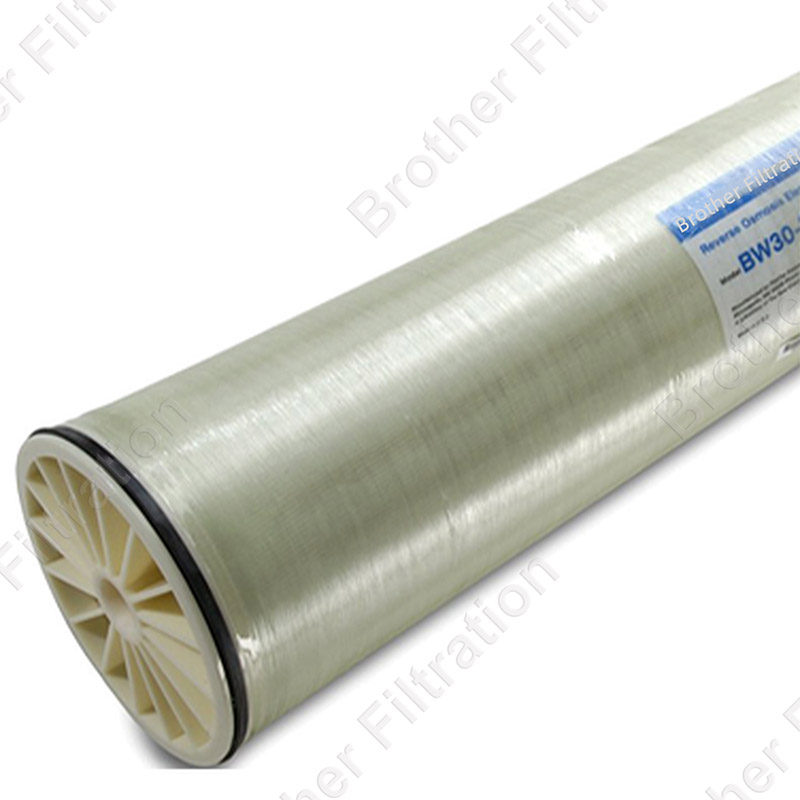
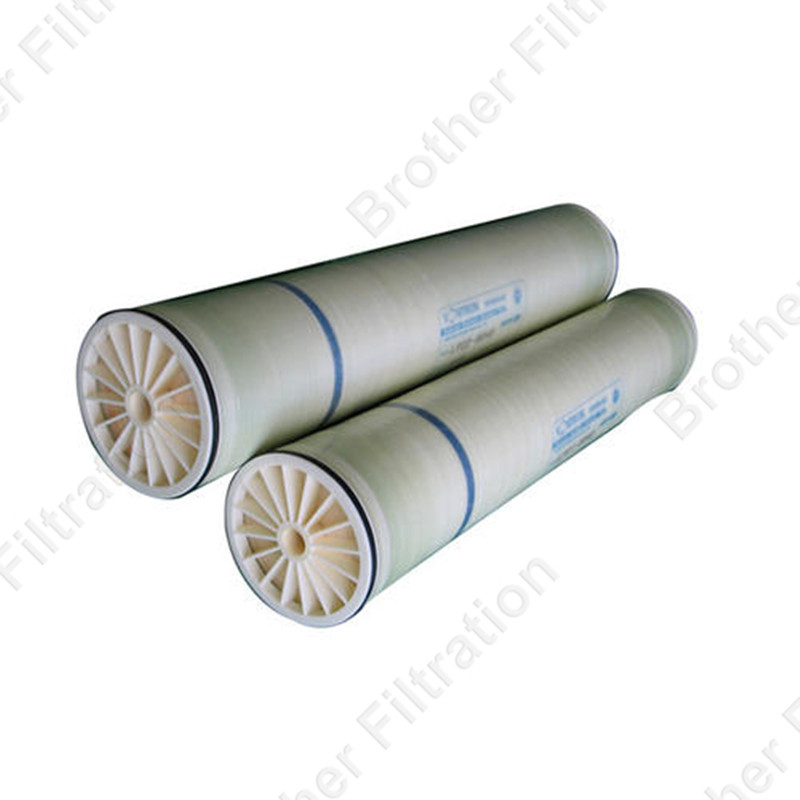
A semipermeable membrane is used in the reverse osmosis (RO) method of water treatment to filter out larger particles. In reverse osmosis, osmotic pressure, a collaborating property driven by chemical potential, a thermodynamic parameter, is overcome by applied pressure.
Brother Filtration RO membranes are designed for the treatment of most municipal, industrial, and seawater. They have the characteristics of low pressure in operation, high permeate flow, and excellent rejection performance in removing solvable salts. Also, they are equipped with high desalination and desiliconization rates, saving system operating costs and equipment investment, and have good chemical stability.
RO membranes offered by Brother Filtration are suitable for the treatment of surface water, underground water and municipal water with TDS is less than 10000/2000ppm. They can handle municipal and industrial reclaimed water reuse, electroplating wastewater treatment, and the treatment of water resources with bio-pollution and oxidizing substances. Additionally, they can be applied to food processing and pharmaceutical manufacturing industries.
How do select the membrane element according to the salt content of inlet water?
Facing so many RO membranes of different sizes and types, it may be difficult to choose the appropriate one. The following table helps you to make a decision.

Permeate flow is the average value. The yield deviation of a single membrane element is ±20%.