


When you’re dealing with large-scale water treatment, food processing, or industrial fluid systems, one small component can quietly make a massive difference: the high flow filter cartridge.
I’ve seen these used everywhere from cooling water setups in power plants to beverage bottling lines, and what I’ve learned is this: if you choose the right one, you save time, money, and quite a few headaches.
What Is a High-Flow Filter Cartridge?
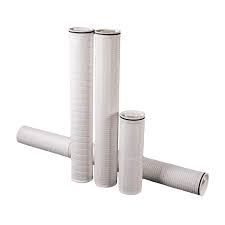
In simple terms, a high flow cartridge is a filter element designed to handle large volumes of liquid without clogging too quickly or slowing down the process. Unlike conventional cartridges, which may need dozens of units in parallel, a single high-flow cartridge can often replace multiple standard filters.
They’re typically built with larger diameters (around 6 inches) and lengths that range from 20 to 80 inches, depending on your setup. The result? More surface area, better dirt-holding capacity, and much less frequent change-outs.
Why Industries Use Them
From what I’ve seen, companies don’t choose high flow cartridges just for fun; they do it because the stakes are high:
- Water treatment plants use them to handle incoming raw water with high sediment loads.
- Food and beverage facilities rely on them for consistent quality in processing lines.
- Pharma and petrochemicals use them because contamination isn’t an option; they need reliability.
Key Features You’ll Notice
Based on both product specs and field experience, here are the standout features of high flow cartridges:
- High dirt holding capacity – pleated designs mean they trap more contaminants before clogging.
- Flexible sizes – usually available in 20”, 40”, 60”, and 80” lengths.
- Micron ratings from 1 to 100 – you can go super fine (pharma) or coarser (cooling water).
- Material variety – polypropylene, glass fiber, polyester, and even cellulose resin.
- Inside-out or outside-in flow options – depending on your housing setup.
- Quick change-outs – one element can replace multiple standard filters, saving labor.
I’ll admit, the first time I worked with an Ultipleat High Flow (Pall) cartridge, I was skeptical; it looked huge compared to standard filters. But once we installed it, the operators loved it because replacement took minutes instead of hours.
Practical Benefits (Beyond the Brochure)
The brochures will tell you about efficiency and space savings, but here’s what actually matters on the ground:
- Less downtime. Instead of changing 30 small filters, you might just swap 3–4 high-flow elements.
- Smaller footprint. Housings take up less floor space, which is gold in crowded plants.
- Energy savings. Lower pressure drop means pumps don’t have to work as hard.
- Fewer leaks and errors. With fewer elements, there’s less chance of improper sealing.
The downside? They’re not cheap. I’ve seen cartridges priced between $200 and $400 each, depending on brand and micron rating. But when you consider downtime costs, they often pay for themselves.
Things I’d Recommend Before Choosing
- Check your flow rates. For example, a 60-inch Brother Filtration cartridge can handle about 113 m³/h (500 GPM). Make sure your system matches that.
- Think about spare stock. Lead times can bite you keep extras on the shelf.
- Get operator input. They’ll tell you whether a filter is easy or painful to work with.
- Don’t overspec micron ratings. Sometimes 20 microns is enough. Going smaller just means clogging faster.
Industries That Benefit Most
I’ve noticed high flow cartridges are especially valuable in industries where:
- Process reliability is critical (pharma, beverages, semiconductors).
- Large water volumes are treated daily (power plants, steel mills).
- Space is limited, and compact systems are necessary.
In each case, the logic is the same: fewer filter changes, less downtime, better system efficiency.
How Does a High Flow Filter Cartridge Work?
High flow filter cartridges operate on the same basic principle as standard cartridges-forcing liquid through a porous media to trap contaminants-but with significant design improvements that maximize throughput and efficiency.
The Construction Advantage
A typical high flow cartridge uses:
- Pleated filter media that dramatically increases surface area (2-3x more than standard cartridges)
- Larger diameter housing to accommodate higher flow rates without excessive pressure drop
- Optimized media formulation to balance dirt-holding capacity with flow efficiency
- Reinforced structure to withstand higher pressures and flow velocities
Flow Direction Options
High flow cartridges are available in two configurations:
- Outside-In Flow: Liquid enters the outer surface and exits through the inner core. Most common for suspended solids removal.
- Inside-Out Flow: Liquid enters the inner core and exits through the pleated surface. Often used in specialized applications.
Pressure Drop Advantage
The increased surface area of a high flow cartridge means:
- Lower initial pressure drop compared to multiple standard filters
- Extended service life before the differential pressure warning activates
- Reduced pump strain and energy consumption
- Consistent flow rates throughout the cartridge’s working life
The relationship is straightforward: more surface area = lower pressure drop = longer intervals between changes.
High Flow Filter Cartridge vs. Standard Filter Cartridge
Choosing between high flow and standard cartridges depends on your specific application requirements. Here’s how they compare:
| Feature | High Flow Cartridge | Standard Cartridge |
| Flow Capacity | 100-500+ GPM | 20-100 GPM |
| Number of Units Needed | 1-4 units | 5-30 units |
| Filtration Area | 2-3x larger | Smaller standard area |
| Housing Footprint | Compact | Generally larger |
| Replacement Frequency | Lower (3-6 months typical) | Higher (1-3 months typical) |
| Micron Ratings | 1-100 microns available | 1-100 microns available |
| Typical Cost per Unit | $200-$400 | $50-$150 |
| Dirt Holding Capacity | Very High (100+ grams) | Moderate (30-50 grams) |
| Pressure Drop | Lower (efficiency) | Can be higher |
| Downtime per Change | Minutes (fewer units) | Hours (many units) |
| Installation Space | Minimal | More space required |
| Maintenance Labor | Lower (fewer changes) | Higher (more units) |
When to Use Each Type
Choose High Flow Cartridges if you:
- Need to handle 100+ GPM continuously
- Want to minimize downtime and maintenance labor
- Have space constraints or compact facility design
- Process high-sediment or challenging liquids
- Require consistent quality in critical applications
- Operate 24/7 industrial processes
Standard Cartridges may work if you:
- Have lower flow requirements (<100 GPM)
- Have ample space for multiple housings
- Need lower initial capital investment
- Run batch processes with scheduled downtime tolerance
- Have applications where high-flow isn’t necessary
- Are doing emergency filtration or bypass applications
Key Benefits of High Flow Filter Cartridges
The advantages go beyond simple specifications. Here’s what you actually gain in real operations:
Operational Benefits
Reduced Downtime Instead of changing 20-30 small filter cartridges, you might swap just 3-4 high-flow elements. In plants operating continuously, this means:
- Minutes instead of hours for changeover
- Less production disruption
- Fewer skilled technicians required for maintenance
- Better equipment reliability during critical operations
Smaller Footprint High flow housings take up significantly less floor space, which matters in:
- Compact industrial facilities
- Retrofit scenarios with limited space
- Mobile or temporary installations
- Facilities paying for occupied floor space
Energy Efficiency Lower pressure drop throughout the cartridge’s service life means:
- Reduced pump energy consumption
- Lower operational heating in the liquid
- Extended pump service life
- Improved overall system efficiency (often 10-20% energy savings)
Fewer Leak Points With fewer cartridges and housings, you have:
- Fewer seals and connection points
- Reduced risk of improper installation
- Lower likelihood of leaks
- Simpler maintenance protocols
Maintenance Benefits
Extended Service Intervals The superior dirt-holding capacity means:
- Cartridges last 2-3x longer than standard filters
- Fewer interruptions to production
- More predictable replacement schedules
- Reduced inventory management complexity
Simplified Inventory Management
- Keep fewer spare cartridges in stock
- Smaller storage space requirements
- Easier tracking and rotation
- Reduced tied-up capital in spare parts
Economic Benefits
Lower Total Cost of Ownership While individual cartridges are more expensive ($200-$400), the TCO calculation often favors high-flow:
Cost per unit: $300 (high-flow) vs. $100 (standard × 5 units) = $500
Replacement frequency: Every 4 months vs. Every 1 month
Annual cartridge cost: $900 vs. $5,000+
Maintenance labor: 4 hours/year vs. 20+ hours/year
Downtime value: Minimal vs. Significant
Total annual cost: $900-1,200 vs. $6,000-8,000+
Labor Cost Reduction
- Fewer filter changes = less labor per year
- Reduced technical expertise required per change
- Faster training for maintenance staff
- More productive equipment uptime
High Flow Filter Cartridge Specifications
Understanding the technical specifications ensures you select the right cartridge for your application.
Standard Size Options
| Size | Typical Diameter | Flow Capacity | Filtration Area | Best For |
| 20″ | 3.5″-6″ | 30-50 GPM | Small | Compact systems, limited space |
| 40″ | 3.5″-6″ | 80-150 GPM | Medium | Standard industrial operations |
| 60″ | 3.5″-6″ | 120-250 GPM | Large | High-capacity continuous operations |
| 80″ | 3.5″-6″ | 180-350 GPM | Extra Large | Maximum efficiency requirements |
Note: Flow rates vary depending on cartridge media type, construction, and application. Brother Filtration cartridges at 60″ handle approximately 113 m³/h (500 GPM) depending on the specific media and configuration.
Available Micron Ratings
Understanding micron ratings is crucial for proper selection:
| Rating | Micron Size | Typical Applications |
| Ultra-Fine | 1-3 | Pharmaceutical, semiconductors, ultra-pure requirements |
| Fine | 5-10 | Precision industrial, specialized food processing |
| Standard | 20-25 | Most common industrial, beverage processing, cooling water |
| Coarse | 50-100 | Pre-filtration, bypass, initial sediment removal, tank filling |
Pro Tip: Don’t over-specify your micron rating. Going finer than necessary means:
- Faster clogging (more frequent changes)
- Higher initial pressure drop
- Increased operational costs
- Unnecessary product expense
For example, if your application only requires 20-micron filtration, don’t install 10-micron cartridges. You’ll change them much more frequently and waste money.
Filter Media Options
Different media compositions suit different applications:
Glass Fiber
- Superior dirt-holding capacity
- Longer element life (up to 30% longer)
- Higher upfront cost
- Best for: Heavy sediment loads, demanding applications
Polypropylene (PP)
- Cost-effective and reliable
- Good general performance
- Standard industry choice
- Best for: Budget-conscious operations, general filtration
Polyester
- Chemical resistant to many solvents
- Higher temperature tolerance
- Premium performance
- Best for: Specialty chemical applications, high-temp systems
Cellulose Resin
- Natural fiber construction
- Moderate dirt capacity
- Very economical
- Best for: Standard water filtration, cost-sensitive operations
Material Construction
End Caps: Plastic, aluminum, stainless steel, or sanitary threaded options Center Tube: Fiberglass, plastic, or stainless steel Seals: Buna-N standard (compatible with most liquids), Viton for high-temperature or chemical compatibility Flow Direction: Specify inside-out or outside-in based on your housing design
Performance Specifications
| Parameter | Typical Range |
| Absolute Rating | 1-100 microns |
| Operating Pressure | 1-7 bar (15-100 PSI) |
| Differential Pressure (collapse point) | 3-5 bar (higher for glass fiber media) |
| Temperature Range | -5°C to +60°C (standard media) |
| Maximum Flow | 500 GPM per cartridge (typical 60″) |
| Dirt Holding Capacity | 50-200 grams (depends on media type) |
| Initial Pressure Drop | 0.5-2 bar (varies by media and flow rate) |
Custom Specifications Available
Brother Filtration also provides:
- Custom lengths beyond standard sizes
- Specialized media for unique fluid types
- High-temperature versions (up to 80°C+)
- Food-grade certifications (NSF/ANSI)
- Pharmaceutical-grade options (USP compliance)
- Chemical-resistant media for aggressive fluids
Brands and Compatibility
Choose Brother Filtration
Brother Filtration is a solid alternative to the big names like Pall or 3 M. They’re usually 20–30% cheaper, fully compatible with major housings, and I’ve found their lead times are much quicker.
Plus, they offer custom sizes and ratings if you need something specific. For plants that want reliable performance without overspending, Brother Filtration is a smart choice.
Expert Editorial Comment
If you’re managing an industrial process, switching to high-flow filter cartridges is one of those moves that pays off in the long run. Yes, the initial investment is higher, but I think the real savings come from fewer shutdowns and smoother operations.
If I were advising a new plant today, I’d say: start with a trial run. Install a housing, test a couple of cartridges, and see how your dirt loads and operators respond. From there, you’ll know if it’s worth scaling up.
Frequently Asked Questions
1. What’s the difference between high-flow and regular cartridges?
High-flow cartridges handle more liquid with fewer elements, last longer, and clog less often.
2. Who uses high-flow filter cartridges?
They’re common in power plants, food & beverage, pharma, and petrochemical industries.
3. Are high-flow cartridges worth the cost?
Yes, though $200–$400 each, they cut downtime and labor, often saving more in the long run.
4. What should I check before buying one?
Match the cartridge to your flow rate, keep spares, and don’t overspec micron ratings.
5. Why choose Brother Filtration?
They’re 20–30% cheaper, compatible with big-brand housings, ship faster, and offer custom options.
relevant products
Subscribe to our blog newsletter
Get the best, coolest and latest delivered to your inbox each week