...
Knowledge

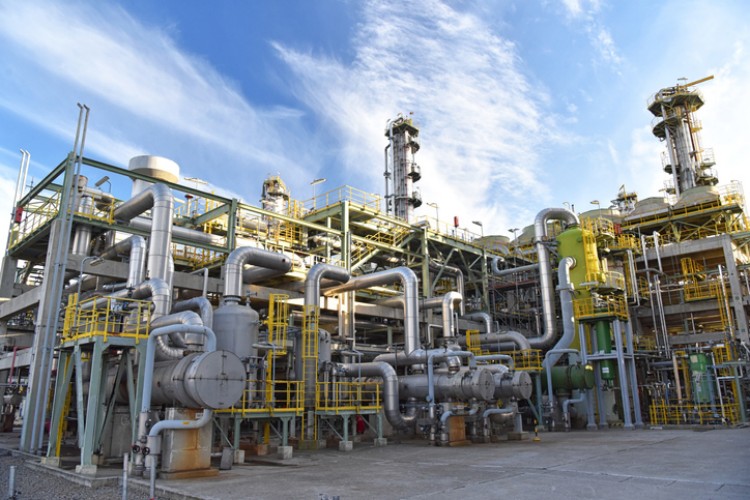
In industrial settings, pipe strainers are utilized to trap and eliminate impurities from pipelines. This method involves disrupting the flow within the pipeline through the use of a perforated plate or a screen mesh. These components, known as strainers in industrial channels, are commonly either basket strainers or Y strainers.

Choosing between these two types can be confusing, and to aid in this decision-making process, it is essential to understand the unique features of basket strainers and Y strainers for a particular application.

This article will delve into the key distinctions between these pipe strainers. However, before we explore these differences, let’s first comprehend the role of a strainer in an industrial application.

Looking for basket strainers, Y strainers, or complete strainer systems for your pipeline? Browse the Brother Filtration product range for industrial strainers and filter housings, or contact our team to specify the right configuration for your application.

Browse products  |  Talk to an engineer

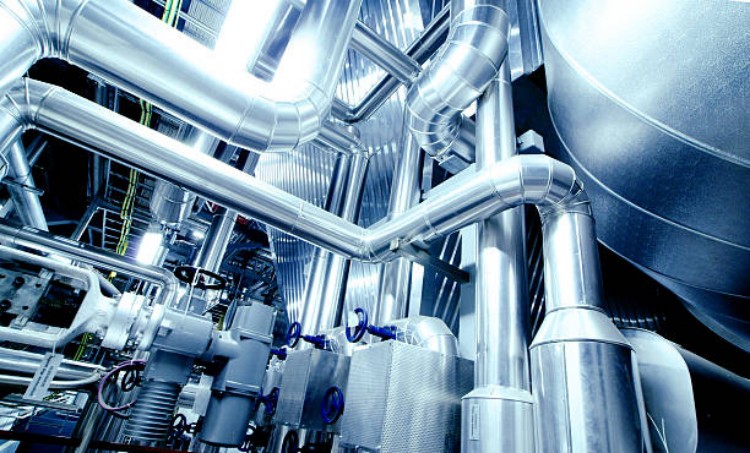
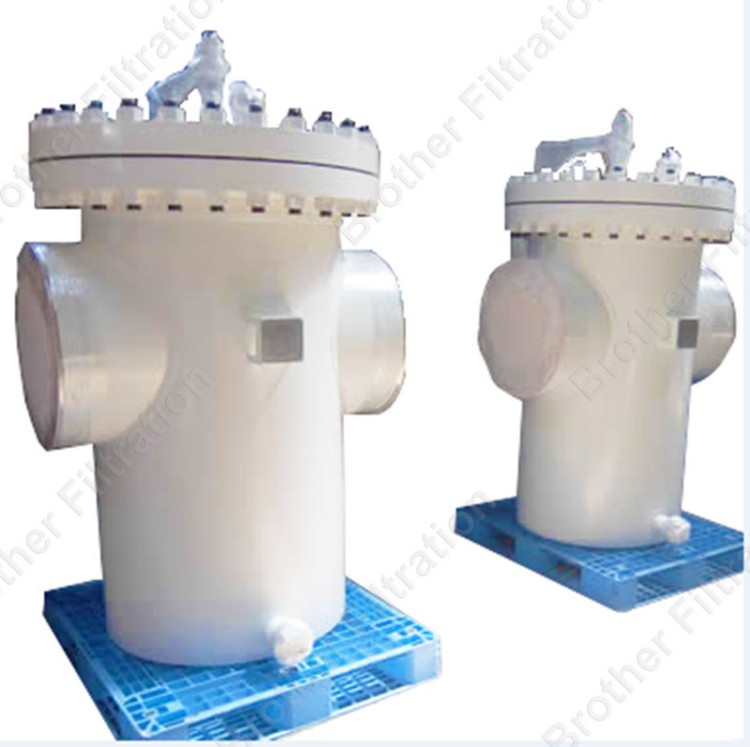
basket-strainer-in-the-piping-system

What is the Function of a Strainer in Industrial Applications?

A strainer is a component that captures and removes impurities from a fluid system. It consists of a perforated or wire mesh cylinder within its body. When fluid enters the strainer, it passes through the mesh cylinder, filtering out particles such as dust and dirt.

Strainers can protect valves, steam traps, flow control valves, and pumps from damage caused by larger particles. They are especially useful for components with moving parts that can be affected by dust if not filtered out.

In a piping system, strainers are placed upstream of pumps during flushing and start-up to prevent damage from construction debris.

It is important to note that a filter and a strainer are distinct, with filters focusing on removing smaller micron-sized particles, while strainers target larger particles using a perforated plate or screen mesh. In applications where larger particles must be removed before fine filtration stages, a properly designed basket strainer filtration system plays a critical role in protecting downstream equipment and maintaining overall system efficiency.

the Function of a Strainer in Industrial Applications

The Basket Strainer

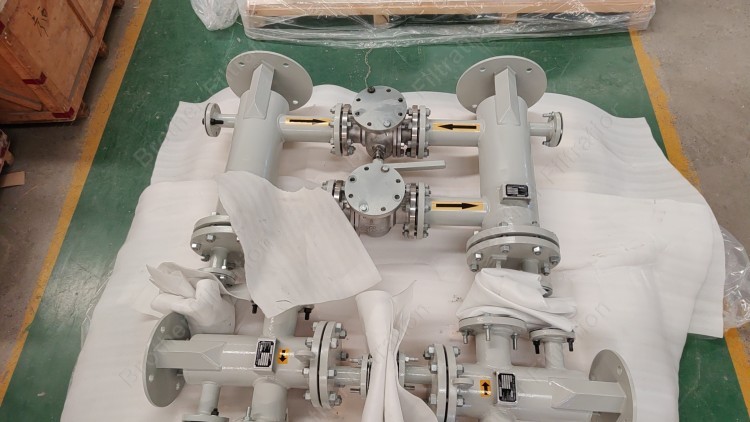
A basket strainer, employed in horizontal piping systems, utilizes a mesh screen to capture solid particles from liquids and gases, safeguarding critical system components from potential damage caused by solid debris. These strainers find application in pipelines that experience high-velocity flows. Installation options include a single basket, referred to as a simplex strainer, or dual baskets in a configuration known as a duplex strainer.

The duplex basket strainer holds an advantage over its simplex counterpart, primarily because it allows for the cleaning of one side of the strainer while the other basket continues the filtration process. In contrast, the simplex strainer requires the system to halt during the cleaning process, which will lead to frequent system downtimes. For systems that demand continuous operation and high-efficiency filtration, partnering with a reliable industrial basket strainer manufacturer can help ensure optimal long-term performance.

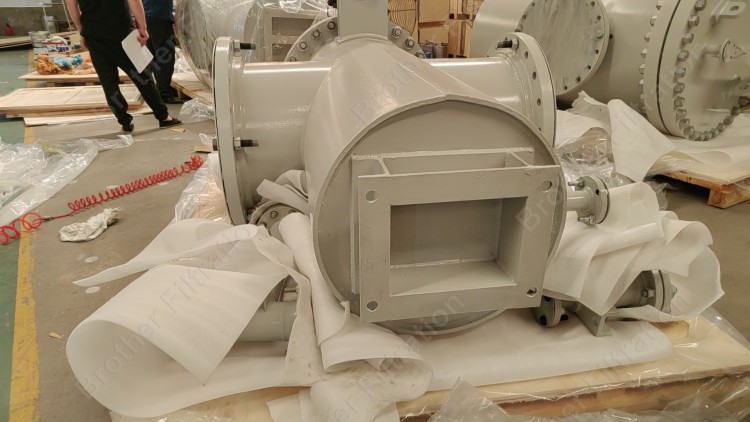
basket strainer

The Y Strainer

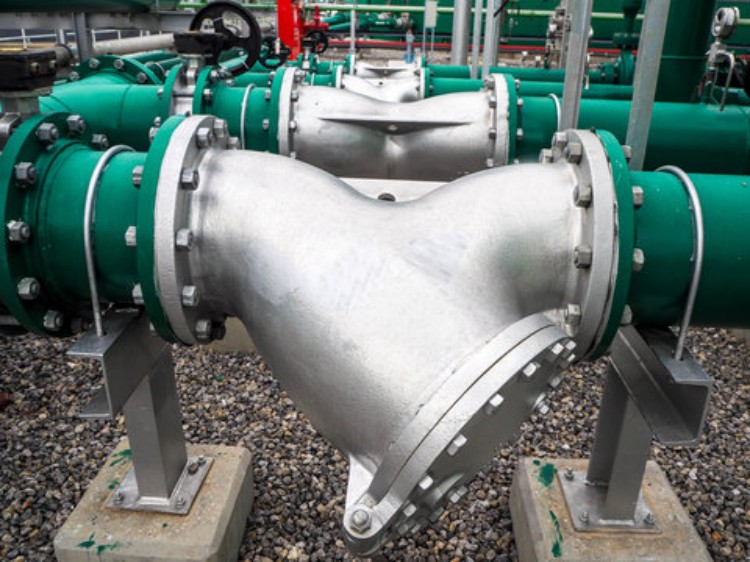
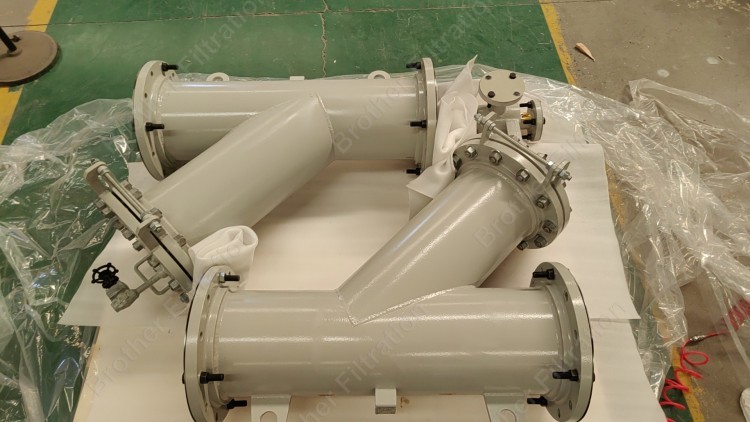
Derived from its Y-shaped configuration, the Y-type strainer stands out as a prevalent industrial strainer commonly found in numerous pipelines. Its affordability makes it a favored choice in many applications. Notably flexible, the Y strainer is suitable for installation in both horizontal and vertical pipelines, in contrast to basket strainers restricted to horizontal use. Particularly adept in high-pressure systems, the Y strainer demonstrates a capacity to handle pressures of up to 6000 psi.

Maintenance for Y strainers is not a constant requirement, provided regular cleaning of the strainer screen prevents mesh clogging. While cleaning entails removing the screen, this pause in the process leads to occasional system downtimes. Alternatively, Y strainers can be designed with blow-down valves to facilitate the cleaning process.

Y strainers

Y Strainer VS Basket Strainer

Y strainers and basket strainers are both types of industrial strainers used to remove impurities from fluids in a piping system, but they differ in their design, application, and specific advantages. Here are the key differences between a Y strainer and a basket strainer:

Design and Shape

Y Strainer: Y strainers have a Y-shaped body with a conical or cylindrical filtering element inside. The fluid flows through the strainer body, and the straining element, typically a perforated screen or mesh, captures impurities.

Basket Strainer: Basket strainers have a cylindrical or spherical body with a removable basket inside. The basket, made of perforated metal or mesh, captures impurities as the fluid passes through the strainer.

Orientation

Y Strainer: Y strainers are typically installed in a vertical or horizontal pipeline, with the Y-shaped body ensuring that the fluid flows through the straining element.

Basket Strainer: Basket strainers are usually installed in a horizontal pipeline, and the fluid flows from the top to the bottom, allowing impurities to be collected in the basket.

Cleaning and Maintenance

Y Strainer: Y strainers are cleaned by removing the cover and manually cleaning or replacing the straining element. This process may require shutting down the system temporarily.

Basket Strainer: Basket strainers are designed for easy maintenance. The basket is removable, allowing for quick cleaning or replacement without interrupting the flow, especially in duplex basket strainers where one basket can be cleaned while the other is in use.

Particle Retention

Y Strainer: Y strainers are effective in capturing larger particles but may have limitations in retaining smaller particles compared to basket strainers.

Basket Strainer: Basket strainers, with their larger surface area, are capable of capturing a broader range of particle sizes, including smaller particles.

Application

Y Strainer: Y strainers are ideal for situations with restricted space and a preference for a compact design. They are frequently employed in pipelines with smaller diameters, making them widely utilized across various industries, including:

  • Oil Production Pipeline: In oil processing, the Y strainer is employed to safeguard essential components of the system from potential damage caused by solid particles. Y strainers are favored by mostly oil production firms for their adaptable nature.
  • Gas Production Pipeline: Y strainers find application in both liquid and steam services for gas production. However, those employed in steam systems come equipped with special housing to withstand elevated temperatures.
  • Mining Industry: In mining operations, the Y strainer safeguards delicate machine components by preventing the intrusion of solid particles.
  • Chemical Production Pipelines: In chemical production pipelines, the Y strainer removes debris from chemicals, ensuring they do not reach the system’s delicate components.
Applications of Basket Strainer

Basket Strainer:

The basket strainer, recognized as the most effective type for large pipelines with high flow velocities, is employed across diverse industries. Some of its primary applications include:

  • Power Generation Pipelines: In power generation pipelines, water filtration is employed to protect the equipment utilized in the process. Duplex basket strainers are predominantly utilized for this purpose, ensuring a continuous and uninterrupted production process.
  • Irrigation: In irrigation on large farms, basket strainers play a role in filtering out sand and rocks. This helps prevent solid particles from entering pumps, thereby avoiding damage to the vital components of the system.
  • Food production: In the food production sector, industrial basket strainers are used to remove solids from liquids. It’s important to verify that the strainer’s mesh size is capable of handling larger particles to prevent them from being included in the final food product.
  • Automotive Fluid Processing: In automotive fluid processing, a variety of fluids are utilized to keep vehicles operational. Ongoing filtration of these fluids can eliminate harmful particles and protect sensitive automotive components from potential damage.
basket strainer in Automotive Fluid Processing

Advantages and Disadvantages of Basket Filters

Basket filters are essential components in fluid filtration systems, widely used across various industries to remove impurities and solid particles from liquids. Understanding the advantages and disadvantages of basket filters is crucial for making informed decisions about their implementation.

Advantages of Basket filters

Basket filters offer effective particle removal, ensuring a cleaner downstream process, and their versatility allows them to be customized based on specific application requirements, making them suitable for a wide range of industries and fluids.

1. Effective Particle Removal: Basket filters excel at efficiently capturing and removing solid particles, preventing potential damage to downstream equipment.

2. Versatility: Suitable for a diverse range of industries and applications, basket filters offer versatility in handling different types of liquids.

3. Customization: The flexibility of basket filters allows for customization based on specific application requirements, such as size, material, and filtration capacity.

4. Low Maintenance (Duplex Configurations): In duplex configurations, where two baskets are used, maintenance can be performed on one basket while the other continues filtration, minimizing downtime.

5. Ease of Installation: Basket filters are generally easy to install, integrating seamlessly into existing piping systems.

Basket filters are generally easy to install

Disadvantages of Basket filters

Basket filters may experience increased pressure drop over time as particles accumulate, potentially affecting the overall system efficiency. Additionally, in simplex configurations, where only one basket is used, flow interruption is required during maintenance and cleaning.

1. Pressure Drop: As particles accumulate within the basket, there may be an increase in pressure drop over time, potentially affecting system efficiency.

2. Limited Filtration Fineness: Basket filters may have limitations in achieving extremely fine filtration compared to some other filter types.

3. Initial Cost: The upfront cost of high-quality basket filters can be relatively higher compared to alternative filtration options.

4. Flow Interruption (Simplex Configurations): In simplex configurations, where only one basket is used, flow interruption is required during maintenance and cleaning.

5. Space Requirements: Depending on size and capacity, basket filters may require considerable space, which could be a consideration in compact installations.

Depending on size and capacity, basket filters may require considerable space

Conclusion

We trust that this article provides clarity on the two primary types of filters prevalent in industrial piping. If you seek top-notch industrial filtration products and services, feel free to reach out to us.

These devices facilitate the refinement, screening, and separation of liquids from solid materials in industrial systems. They effectively prevent the integration of solid matter, like scale, rust, weld metal, and dovetail joints, into streamline or liquid flows. This protective function safeguards machinery and processes, minimizing downtime and the requirement for repairs.

Frequently Asked Questions About Basket and Y Strainer

Here are the common questions people asked and want to know:

1. What is the difference between a basket strainer and a Y strainer?

The core differences are body shape, capacity, and installation flexibility. A basket strainer has a large cylindrical screen basket that holds more debris and suits high flow, high solids applications in horizontal pipelines. A Y type strainer has a smaller angled body, installs in horizontal or vertical pipelines, and works well where particle loads are light and installation space is limited. For heavy industrial pipeline protection, basket strainers dominate. For steam lines, compressed air, and tight installations, Y strainers are the standard.

2. What is a Y strainer used for?

A Y strainer removes solid particles such as scale, rust, pipe debris, and sand from a pipeline before those particles reach downstream equipment. Pumps, valves, meters, and control instruments all benefit from a Y strainer upstream. It is particularly common in steam distribution systems, compressed air lines, cooling water circuits, and chemical process pipelines where the compact body fits where a basket strainer would not.

3. What does a basket strainer do?

A basket strainer traps solid particles in its perforated or mesh basket as fluid flows through the strainer body. Clean fluid continues downstream while retained particles accumulate in the basket. When the basket fills to the point where pressure drop across the strainer reaches the cleaning threshold, the basket is removed, cleaned, and reinstalled. The basket itself is reusable indefinitely unless physically damaged.

4. Which is better, a basket strainer or a Y strainer?

Neither is better in absolute terms. A basket strainer is the right choice when flow rates are high, particle loads are heavy, or long cleaning intervals matter. A Y strainer is the right choice when space is limited, the pipeline is vertical, particle loads are light, or the medium is steam or compressed air. Many systems use both. A basket strainer on the main pipeline and Y strainers protecting individual pieces of equipment is a common arrangement.

5. What is a strainer in a piping system?

A strainer is a mechanical device installed in a pipeline to capture solid particles before they reach and damage downstream equipment. It consists of a pressure rated body housing a perforated or mesh screen element. Fluid passes through the screen, particles above the screen opening are retained, and the screen is periodically removed and cleaned. Unlike a filter cartridge, a strainer screen is not a consumable item. It is cleaned and put back into service.

6. What is a wye strainer?

A wye strainer is simply another name for a Y type strainer. The terms are used interchangeably across the industry. The name comes from the shape of the body, which resembles the letter Y when viewed from the side. Wye strainers and Y strainers are the same product described two different ways.

7. What is a basket strainer in plumbing?

In plumbing and building services applications, a basket strainer is installed in pipelines supplying cooling systems, boiler circuits, and chilled water loops to protect pumps and control valves from debris introduced during installation or carried in the system fluid. The function is identical to industrial applications: debris is captured in the basket and removed during scheduled maintenance rather than being left to accumulate inside pumps and valves where it causes damage.

8. What does a Y strainer do in a pipeline?

A Y strainer in a pipeline intercepts solid particles in the flow and holds them in its internal screen element, preventing them from reaching and damaging pumps, valves, meters, and other equipment downstream. It does this continuously without interrupting the flow, until the screen accumulates enough debris that pressure drop across the strainer reaches the point where cleaning is needed. The screen is then removed, flushed clean, and reinstalled, typically in a matter of minutes.


Subscribe to our blog newsletter

Get the best, coolest and latest delivered to your inbox each week

Have Questions?