A glass of water drawn from a private borewell, industrial processing line, or even a treated municipal supply can appear perfectly clean while still containing harmful microorganisms such as E. coli, Cryptosporidium, and Legionella. According to the World Health Organization, contaminated drinking water contributes to hundreds of thousands of deaths globally each year due to waterborne diseases and microbial contamination.
For decades, chlorination has been the standard method for water disinfection. While effective, chemical treatment introduces several operational challenges, including chemical storage risks, taste and odor changes, and the formation of regulated disinfection byproducts such as trihalomethanes (THMs), which are monitored by the United States Environmental Protection Agency due to potential long-term health concerns.
This is why UV disinfection systems for water treatment are now widely used across residential, commercial, and industrial applications. UV water treatment systems use ultraviolet light to neutralize bacteria, viruses, and protozoa quickly without chemicals, residual taste, or harmful byproducts. Their efficiency, low maintenance requirements, and environmentally friendly operation have made ultraviolet water disinfection one of the fastest-growing water purification technologies worldwide.
This guide explains how UV water disinfection systems work, which pathogens they eliminate, where they are commonly used, how to maintain them properly, and what factors to consider when selecting the right system for your application.
What Is a UV Disinfection System?
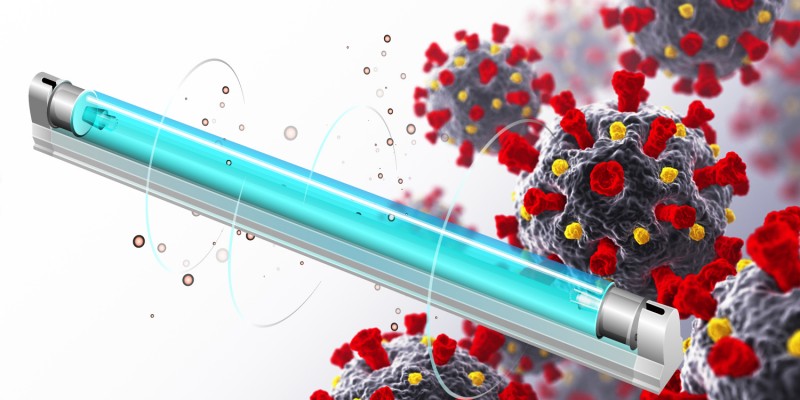
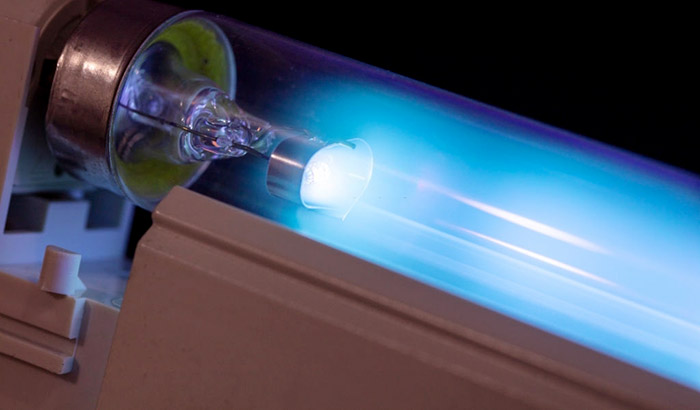
A UV disinfection system is a water treatment technology that uses ultraviolet light in the UV-C spectrum to deactivate harmful microorganisms present in water.
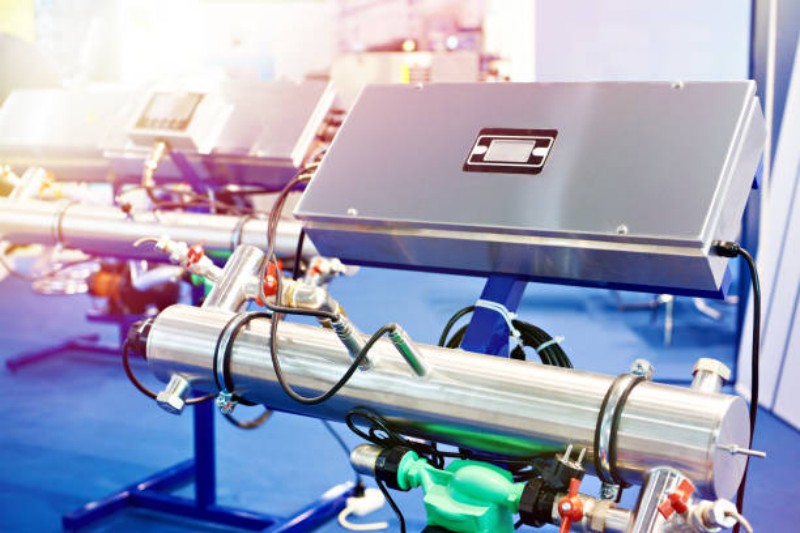
Water flows through a sealed stainless steel reactor chamber housing a UV lamp protected by a quartz sleeve. As the water passes through, it is exposed to UV-C light at a specific wavelength of 253.7 nanometers. That wavelength is not random. Research published in water treatment engineering literature has established 253.7 nm as the point of peak disinfecting effectiveness, the wavelength at which UV light most efficiently breaks apart the DNA and RNA bonds inside microbial cells.
Once that DNA is damaged, the pathogen cannot reproduce. A microorganism that cannot reproduce cannot cause infection. It passes through the system completely inert. No chemicals are added. No taste or odor changes occur. The water that exits the UV chamber is chemically identical to what entered, just without functional pathogens.
How the UV Water Disinfection Process Works Step by Step
Understanding the UV disinfection process removes any mystery about why it has become so widely trusted. Here is what happens inside the chamber from the moment water enters:
Step 1: Water enters the UV reactor. Pretreated, filtered water flows into the stainless steel reactor housing. Flow rate is calibrated to ensure adequate UV exposure time.
Step 2: Exposure to UV-C light: The UV lamp emits high-intensity germicidal light. The quartz sleeve surrounding the lamp allows UV light to pass through efficiently while protecting the lamp from direct water contact.
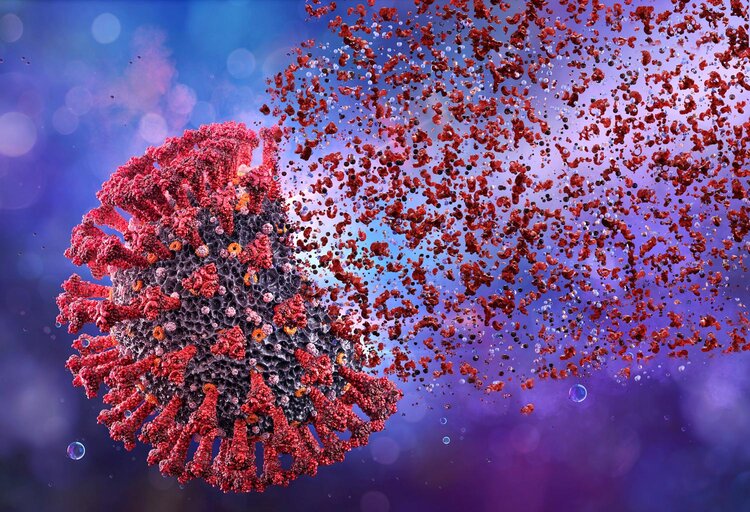
Step 3: DNA and RNA disruption: UV-C photons penetrate the cell walls of microorganisms and break the molecular bonds in their DNA and RNA structure. This process is called the DNA damage process.
Step 4: Microorganisms become inactive, and viruses lose the ability to replicate. They are present but harmless.
Step 5: Treated water exits the system: Disinfected water moves downstream for use or further treatment. The entire process takes seconds.
Why Water Clarity Is Non-Negotiable?
Here is the one condition UV treatment cannot overcome on its own: turbid water.
UV light travels in straight lines. Suspended particles, sediment, organic matter, iron deposits physically block UV photons from reaching microorganisms sheltering behind them. A pathogen hidden behind a particle can pass through a UV chamber completely unaffected, regardless of how powerful the lamp is.
This is not a flaw in the technology. It is a physics constraint that pre-filtration solves completely.
Common pre-filtration options installed upstream of UV units:
- Sediment filters: remove physical particles and suspended solids
- Cartridge filters: fine particle removal for cleaner feed water
- Bag filters: high-flow applications with moderate cloudiness
- Multimedia filters: layered filtration for varied particle sizes
- Activated carbon filters: remove organics, chlorine, and color
For industrial water treatment disinfection systems, combining solid pre-filtration with UV creates a reliably robust purification process. Skip pre-filtration, and you are measuring UV lamp output while ignoring whether the water reaching it is actually treatable.
What UV Disinfection Effectively Neutralizes
UV-C light at the correct dose is effective against a wide range of waterborne threats:
- Bacteria: E. coli, Salmonella, Legionella, Campylobacter
- Viruses: Hepatitis A, Rotavirus, Adenovirus
- Protozoa: Giardia lamblia, Cryptosporidium parvum (notably resistant to chlorine)
- Fungi and mold spores
- Algae
Harmful microorganisms deserve specific mention. It is highly resistant to chlorine disinfection at standard doses, which is why UV treatment has become the method of choice for drinking water systems dealing with this particular bacterium.
Which industries can benefit from UV water treatment systems?
UV Sterilization system is more than just discharge lamps in pipes. Commercial UV water sterilizers, industrial UV water sterilizers, and residential UV water sterilizers are used in various industries such as:
UV disinfection systems can help to achieve the quality of water as per specifications laid down by the FDA( Food and Drug Administration).
Bio-Pharmaceutical industry
Water used for pharmaceutical and medical projects and CIP(Cleaning in Place) should be free of pollutants such as ozone, chlorine, and bacterial substances.
Cosmetics
Microbe- and pathogen-free water guarantees quality and extends the shelf life of cosmetics. It has become the first choice for the global cosmetics industry.
Wastewater Disinfection and Reuse
UV can help address water scarcity and the rising cost of fresh water, helping by treating wastewater in a third stage.
Centralized Drinking Water
UV Drinking Water Disinfection Systems are an easy, affordable solution to ensuring pure water at every tap in your home or office.
Swimming Pools
UV, a chemical-free technology, is a safer and more cost-effective method of sanitizing swimming pools
Key Components of a UV Disinfection System
Every UV water disinfection system shares the same core architecture. Understanding what each component does helps with both system selection and ongoing maintenance.
| Component |
Function |
Maintenance Note |
| UV Lamp |
Emits germicidal UV-C light at 253.7 nm |
Replace every 8,000 to 12,000 hours |
| Quartz Sleeve |
Protects lamp, transmits UV light efficiently |
Clean regularly to prevent mineral scaling |
| Reactor Chamber |
Stainless steel housing where water is treated |
Inspect for fouling and corrosion periodically |
| Ballast / Controller |
Regulates electrical supply to the lamp |
Monitor for output consistency |
| UV Intensity Monitor |
Measures real-time UV output and triggers alerts |
Calibrate annually |
If the quartz sleeve develops scale buildup and the UV intensity monitor is not checked, output can drop significantly without any visible sign of failure. The lamp may still glow. The water may still flow. But disinfection effectiveness falls below the required dose threshold. This is the most common source of UV system underperformance in the field.
What are the benefits of UV Sterilizers?
Because UV water treatment is a chemical-free process, there is no need to deal with potentially dangerous chemicals, such as chlorine, and no chemical disinfection by-products. And UV disinfection is almost immediate.
- Virtually all microorganisms are susceptible to Brother Filtration ultraviolet disinfection.
- Continuous or intermittent disinfection can be provided without special attention.
- The most cost-effective disinfection system in the market.
- No chemicals are introduced so there is no chance of an overdose
- UV sanitizes in seconds without any contact tank or hold time
- It is Simple installation and maintenance.
UV sterilizers are highly effective in eliminating all microbial contamination present throughout the water. However, there must be sufficient exposure to the sterilizer’s UV light for proper disinfection to take place.
UV sterilizers are suitable for a wide range of uses, from drinking water in residential areas or small commercial businesses to large water sources throughout municipal areas and industrial facilities.
What about the periodic maintenance of the UV disinfection system?
There are certain instances that occur in which the water is not sufficiently pretreated and turbidity levels are insignificant. Routine inspection and cleaning can be done every 6 months. In cases of high turbidity and hardness, more frequent cleaning may be required.
Finally, UV lamps have a limited lifespan and must be replaced once worn out. In the event of premature lamp failure, a supervisory circuit will provide a signal to recommend replacement.
Conclusion
UV disinfection technology has become one of the most reliable and widely adopted solutions for modern water treatment and wastewater treatment applications. A properly designed UV water disinfection system provides fast, chemical-free protection against harmful microorganisms while reducing the risks associated with chlorine-based treatment methods.
Its effectiveness, low operating cost, and minimal maintenance requirements make UV water treatment ideal for residential, commercial, and industrial use. Whether the goal is improving water quality, meeting regulatory compliance standards, or protecting operational processes, ultraviolet disinfection delivers consistent and dependable performance.
To ensure long-term efficiency, every UV water disinfection system should be correctly sized for peak flow rates, supported with proper pre-filtration, and maintained through regular lamp replacement and quartz sleeve cleaning. These simple maintenance practices are essential for maintaining optimal microbial control and system reliability.
For organizations and homeowners looking for a safe, environmentally friendly, and cost-effective water purification solution, UV water disinfection systems remain one of the most efficient technologies available today.
Frequently Asked Questions
Is UV disinfection better than chlorination for drinking water?
For point-of-use drinking water treatment, UV is generally preferred. It is faster, adds no chemicals, produces no harmful byproducts, and is effective against Cryptosporidium, which chlorine struggles to neutralize at standard doses. Chlorine retains an advantage in large distribution systems that need residual disinfection protection through the pipe network.
Can UV systems remove viruses and bacteria?
Yes. UV-C light at an adequate dose is effective against bacteria, viruses, and protozoa. Effectiveness depends on proper system sizing, adequate pre-filtration, and maintaining the UV lamp within its rated output range.
Does UV treatment change how water tastes or smells?
No. UV radiation does not alter water chemistry. There is no change to taste, odor, pH, or mineral content. This makes it particularly suitable for applications where water quality and taste are commercially important, such as brewing or beverage production.
How does UV disinfection for well water work?
Well water is passed through a sediment pre-filter first to remove particles that would block UV penetration. It then flows through the UV reactor chamber, where UV-C light deactivates bacteria, viruses, and other pathogens present. The treated water exits ready for use with no chemical residual added.
Does UV work on turbid or cloudy water?
Not reliably without pre-filtration. Turbid water blocks UV light and allows microorganisms to pass through untreated. Pre-filtration to achieve a turbidity of 1 NTU or below and a UV transmittance of at least 75% is recommended before UV treatment.
How often do UV lamps need to be replaced?
Most UV lamps require replacement after 8,000 to 12,000 operating hours. For a system running 24 hours a day, that is approximately once per year. Modern systems include monitors that track hours and output levels, so replacement timing is predictable rather than reactive.
Can UV disinfection be used for wastewater treatment?
Yes, UV disinfection is widely used in municipal wastewater treatment plants for final effluent disinfection before environmental discharge, as well as in industrial settings for process water recycling and reuse. It is one of the primary technologies recommended in the EPA water reuse guidelines.
What is the difference between UV disinfection and UV sterilization?
Disinfection reduces microbial populations to a safe level. Sterilization implies the complete elimination of all living organisms. UV systems are correctly described as disinfection systems they achieve log reduction targets (typically 4 to 6 log reduction) rather than absolute sterility. For most drinking water and industrial process water applications, disinfection to the required log reduction level is the appropriate and sufficient standard.
Sources and References