

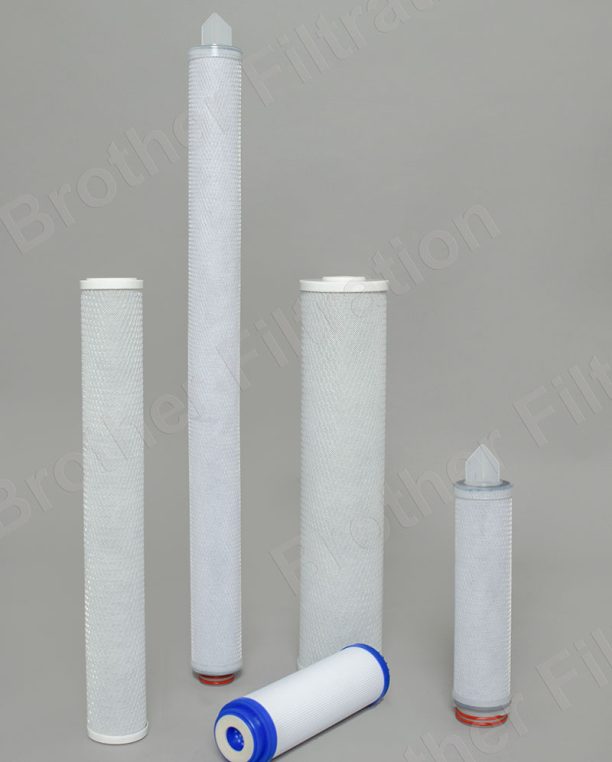
Choosing between a CTO (Carbon Block) and GAC (Granular Activated Carbon) water filter depends on what contaminants you need to remove, your flow rate requirements, and your system design. CTO filters provide tighter filtration and stronger chlorine reduction, while GAC filters offer higher flow and excellent taste and odor improvement. This guide compares performance, structure, and best use cases so you can make the right decision.

Because, by having a direct chemical reaction with the carbon, oxidizing elements in water are eliminated. Instead of adhering to the carbon particle in this instance, chlorine chemically combines with the carbon to create carbon dioxide.
As a result, chlorine removal via carbon filters is limitless. Unlike with organic elimination, chlorine does not become saturated in the carbon bed.
What is a GAC filter?
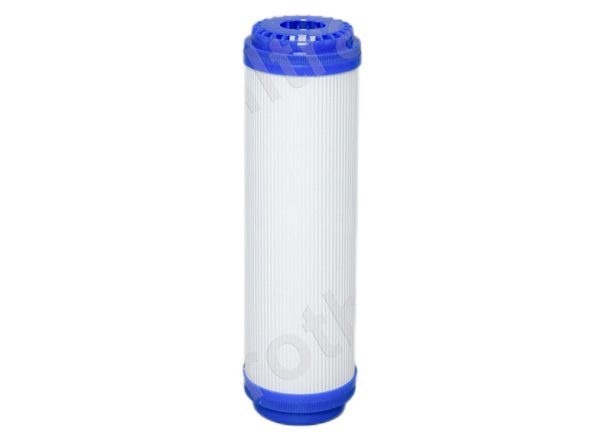
GAC stands for Granular Activated Carbon. Instead of a compressed block, this filter holds loose carbon granules inside a cartridge housing. Think of it like a tube filled with small charcoal pebbles.
Water flows around and between those granules, which means it moves faster and with less pressure drop. The filtration relies almost entirely on adsorption contaminants clinging to the carbon surface as water passes through.
Manufacturing Methods of GAC Water Filter Cartridge
The granular activated carbon filter cartridge is manufactured by placing activated carbon particles into a specialized plastic housing.
Welding equipment is then used to attach end caps to both ends of the housing securely. Non-woven filter pieces are inserted at each housing end to prevent carbon powder and black water during usage.
The design allows for customization of the end caps to accommodate various types of connection ports based on customer requirements. These filter cartridges exhibit excellent adsorption capabilities, effectively eliminating residual chlorine, odors, color, and organic impurities from water.
Key Characteristics:
- Excellent chlorine removal
- Great taste and odor improvement
- Decent reduction of some organic compounds
- Higher flow rate compared to CTO
- Lower cost per cartridge in most brands
Where GAC falls short is micron control. Because the granules are loose, water can find paths of least resistance and channel through without contacting as much carbon surface area. That means filtration is less uniform than a solid block.
For municipal water that has already been treated and just tastes like a swimming pool, GAC handles the job well. For anything heavier than that, you probably want something denser.
What is a CTO filter?
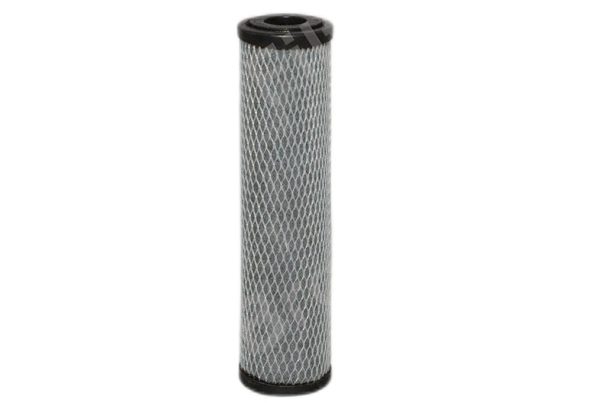
The carbon block filter compresses loose carbon blocks together to form a filter. In the carbon block filter, one pound of compressed activated carbon (the amount in a standard 10-inch filter cartridge) has a surface area equivalent to 160 acres of farm, making it one of the most absorbent materials known to man.
There are a variety of raw materials used to make carbon block filters. Some of the most common sources of carbon are bituminous coal, wood, and nutshell. Carbon filters remove contaminants through adsorption.
Adsorption means that contaminants are attracted to the surface of the activated carbon and held to it, much the same way a magnet attracts and holds iron filings.
Manufacturing Methods of CTO Water Filter Cartridge
The CTO water filter cartridge utilizes coal-activated carbon and coconut shell-activated carbon with high adsorption capabilities as its filter material. These materials undergo sintering and compression using food-grade adhesive, resulting in a durable cartridge.
To prevent the release of carbon powder, a layer of non-woven fabric with filtering capabilities is wrapped both inside and outside of the filter cartridge. This ensures that the carbon core remains intact. The carbon core is then securely installed into the filter cartridge, providing effective sealing performance.
What does a CTO filter typically offer?
- Micron ratings between 0.5 and 10 microns, depending on the cartridge
- Strong chlorine reduction
- Solid sediment removal
- Reduction of VOCs, certain pesticides, and some heavy metals
- Noticeable improvement in taste and odor
Because the carbon is tightly compressed, CTO filters offer more precise filtration and higher contaminant retention.
How do activated carbon filters work?
Activated carbon filters work by using a process called adsorption to remove impurities from water or air. Here is how they work:
Adsorption: Activated carbon has a large surface area with pores that can trap and hold contaminants. When water or air passes through the filter, the impurities in the water or air get trapped on the surface of the activated carbon.
Chemical reactions: Some impurities are removed through chemical reactions with the activated carbon material. The contaminants can bond to the surface of the carbon through various mechanisms like van der Waals forces, ion exchange, and chemisorption.
Pore structure: The porous structure of activated carbon filters increases their surface area, providing more opportunities for contaminants to be captured and removed from the water or air.
Regeneration: Over time, the pores of the activated carbon can become saturated with contaminants. The filter can be regenerated by either replacing the activated carbon media or by certain methods such as washing and heating the filter to release trapped contaminants.
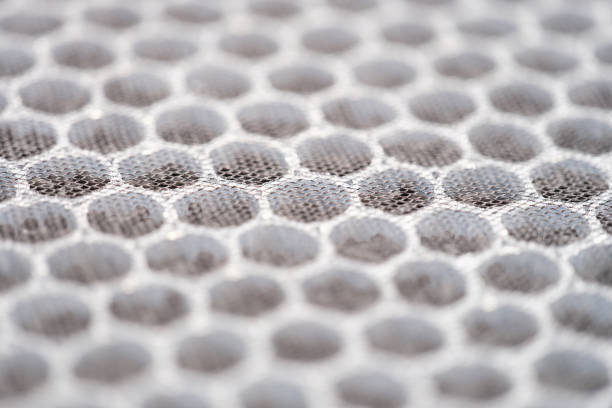
Granule Activated Carbon Filter Element vs Activated Carbon Block Filter Element
Granule Activated Carbon (GAC) filter elements and Activated Carbon Block (CTO ) filter elements are two common types of water filtration media used in various applications, including residential, commercial, and industrial settings.
While both utilize activated carbon as the primary filtering agent, they differ in their physical structure and filtering capabilities.
Structure
The carbon used to make granule-activated carbon filters has been mashed up and is loosely held together inside a cartridge or another container. Instead, activated carbon is ground into a fine powder to create carbon block filters. After combining this powder with a food-safe binder, the mixture is heated up and squeezed to form a solid block.
Filtration Accuracy
Although both the CTO and GAC filters use ground carbon, the CTO filter element’s carbon is typically processed into a considerably finer powder. In contrast to the particles used in GAC filters, the carbon particles in a block filter are typically five to twenty times smaller.
Dirty-holding Capacity
Generally, CTO filters can filter our more contaminants than GAC filters, due to their more compact structures.
Flow Rate
The looser nature of GAC filters means that they provide a much higher flow rate, which essentially means that you can purify much more water in less time.
CTO filter is full of fine holes, so its ability to decolourization is excellent, but it easily leads to a plug problem. However, strong adsorption of GAC can perform perfectly in the same situation.
Filter Costs
Carbon block filters are more expensive due to their time-consuming manufacturing processes. However, they offer near-perfect filtration efficiency and are considered the best choice for this purpose. Granulated carbon filters, in contrast, have lower manufacturing costs, which makes them a more affordable option.
Wide Range Of Applications
Activated carbon filtration systems have long been favoured for their ability to effectively filter out residual chlorine, unpleasant odours, and tastes. They have been integral components in various water purification setups, operating at different stages.
When faced with the decision between the two, consider your priorities: opt for the high-flow rate of a granular carbon filter or the additional purification effects offered by a CTO filter cartridge.
What Do They Remove from Water?
Activated carbon filters are effective at removing and reducing various contaminants from water. Some of the common impurities that active carbon filters can remove include:
- Chlorine and chemicals: Activated carbon filters can effectively remove chlorine and many chemical compounds from water, improving its taste and odour.
- Volatile organic compounds (VOCs): These are common contaminants found in water sources. Activated carbon filters can absorb and reduce VOCs, including solvents, herbicides, and pesticides.
- Sediments and particles: Activated carbon filters can trap and remove sediments, such as rust, dirt, and sand, from water.
- Organic compounds: Activated carbon filters can reduce the concentration of certain organic compounds, such as benzene, toluene, and xylene, in water.
CTO vs GAC: Honest Side-by-Side Comparison
| Feature | CTO Filter | GAC Filter | Winner For |
| Filtration Tightness | High | Moderate | Heavy particles, chlorine |
| Taste & Odor Removal | Excellent | Excellent | Tie — both do this well |
| Flow Rate | Moderate | High | High-demand households |
| Sediment Removal | Strong | Limited | Pre-filtration stages |
| Cost Per Cartridge | Higher | Lower | Budget-conscious buyers |
| Structure | Compressed solid block | Loose granules | Depends on application |
How to pick the best one for your CTO or GAC?
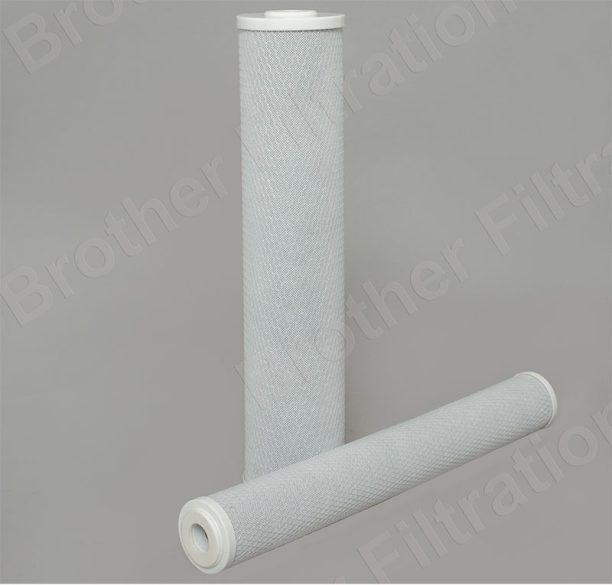
When compared to a GAC at the same flow rate, the CTO’s smaller particle size and uniform pore structure offer a higher level of efficiency in a smaller housing. Because of this, GAC is frequently employed as a technique of treatment for aesthetic impurities (removal of taste, odor and color).
CTO goes beyond the aesthetic improvement of water by reducing particulates, microscopic cysts, lead, volatile organic chemicals (VOCs), and other contaminants.
When selecting between a carbon block filter cartridge and a granule-activated carbon filter cartridge, consider factors such as filtration efficiency, water flow rate, contaminant removal, filter lifespan, and cost.
Carbon block filters offer higher filtration efficiency and can remove a wider range of impurities like chlorine and VOCs. However, they have a lower water flow rate and are generally more expensive.
Granule-activated carbon filters have a higher water flow rate and are more cost-effective, but may be less effective at removing certain impurities. Assess your specific needs and priorities to make an informed decision about which type of carbon filter cartridge is the best choice for you.
When to Use a CTO Filter
Pick CTO when your water needs real work, not just a polish. Situations where CTO makes the most sense:
- Your water has visible sediment or turbidity
- Chlorine levels test on the higher end
- You need a specific micron rating (especially below 5 microns)
- The filter sits before an RO membrane and needs to protect it
- You are filtering well water with unknown or variable quality
I have seen people install GAC filters on well water and wonder why their post-filter water still looks off. The answer is almost always that loose granules cannot catch fine particulates the way a compressed block can. CTO is built for that job.
When to Use a GAC Filter
GAC earns its spot in systems where the water is already reasonably clean but doesn’t taste or smell great.
Go with GAC when:
- Municipal water has bad taste or odor
- High flow rate is required
- Pre-treatment stage in multi-stage systems
- Budget is a major concern
GAC filters also work well in whole-house setups where maintaining household water pressure matters and the goal is general aesthetic improvement rather than heavy contaminant removal.
How Carbon Filters Affect Flow & Pressure
This part gets overlooked constantly, and it causes real problems.
A CTO carbon block creates more resistance. That is just physics, you are forcing water through compressed material. Flow rate drops, but contact time increases, and that extra contact is exactly what improves adsorption. The water spends more time touching carbon, so more contaminants get pulled out.
A GAC filter lets water cruise through faster. Great for flow, but if the cartridge is oversized or the flow rate is too high, water blows past the granules without enough contact time to actually clean up properly. You get volume without quality.
Before picking either filter, check three things:
- System pressure (PSI): Make sure the filter does not choke your line
- Household demand: measured in LPM or GPM, depending on your region
- Required micron rating: match it to what your water actually needs
Ignoring pressure specs is one of the fastest ways to end up with weak flow at every faucet or, worse, a filter that barely does its job because water rushes through too quickly.
Can we combine CTO and GAC?
Yes. Many high-performance systems use GAC followed by CTO.
Recommended Configuration:
- Sediment filter
- GAC filter (bulk chlorine & taste removal)
- CTO filter (fine filtration + polishing)
This staged approach maximizes filtration efficiency and extends cartridge lifespan.
Common Mistakes When Choosing Carbon Filters
- Selecting too fine a micron rating without checking pressure capacity
- Ignoring water testing results
- Choosing based only on price
- Not considering system compatibility
- Skipping staged filtration when required
Always test water quality before selecting filtration media.
Conclusion

CTO and GAC filters are both effective Activated Carbon filters, which have great filtration performance. They have their own strengths in different aspects.
By comparing their different characteristics, it is wise to choose the right activated carbon cartridge for yourself by combining your real usage needs. Sometimes, a combination of CTO and GAC filter cartridges can achieve the best results.
Brother Filtration has been deeply involved in the filtration industry, manufactures all kinds of filter products and offers various filtration solutions. We also produce high-quality CTO and GAC filter cartridges.
If you still don’t know how to choose an Activated Carbon filter, please feel free to contact info@brotherfiltration.com, and our technicians can help you solve your problems.
relevant products


Subscribe to our blog newsletter
Get the best, coolest and latest delivered to your inbox each week
[newsletter_form]