Water is the top priority in the pharmaceutical industry. Each stage of the pharmaceutical process has different water quality requirements, and each stage has its own water type and standards.
Water used in the manufacture of pharmaceuticals and substances has at least potable water, non-potable water, and six types of USP water (USP Purified Water, USP Water for Injection (WFI), USP Sterile Water for Injection, USP Sterile Inhalation Water, USP Antimicrobial Water for Injection, USP Sterile Irrigation Water).
In the initial stage of pharmaceuticals, purified water is the first choice at this stage. This type of water has been treated to remove impurities in the water, which is directly related to the quality of the final product.
In the middle and late stages of pharmaceutical production, sterile water is used. Sterile water has been treated to remove all bacteria and contaminants from the water, which is directly related to the safety of the final product.
In the final stages of pharmaceutical production, distilled water is used. It is treated to remove all impurities (minerals and other contaminants) from the water, ensuring the purity of the final product.
Different method of purifying water used in the pharmaceutical industry
Since the primary source of purified water is drinking water, it is imperative to protect the supplied water from microbial growth. No matter which type of industrial water filtration system is considered to be used in the pharmaceutical industry, the water filtration system must be disinfected regularly, and microorganisms may reproduce during the production process. Below are the different types of industrial water filtration systems that are often used in the pharmaceutical industry:
Electrodeionization
Electrodeionization is one of the most ideal types of purified water. Electrodeionization mainly involves ion exchange and electrolysis, the purpose of which is to eliminate specific ions in water and replace them with more ideal ions. This water treatment focuses on changing the ion composition in a more ideal state. The method is favored in the pharmaceutical industry due to its ease of operation and low maintenance costs.
Reverse osmosis
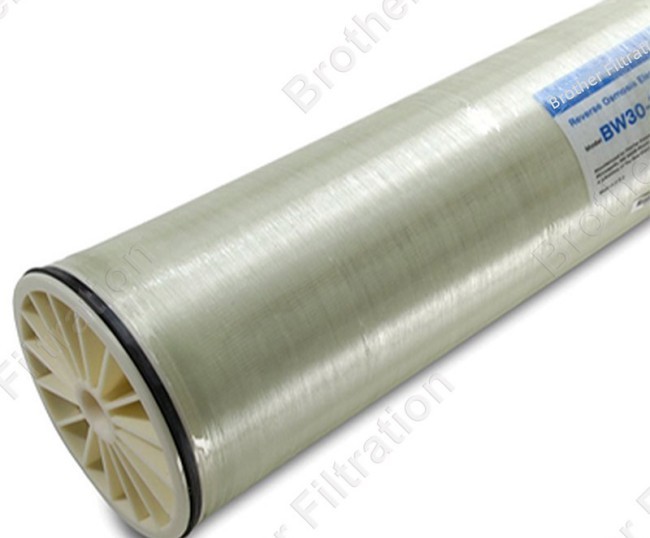
It is widely regarded as one of the most effective methods of purifying water and is widely used in the pharmaceutical industry where water is an important resource and raw material. Reverse osmosis requires the application of pressure to the concentrated solution during osmosis, which disrupts the natural permeate flow and causes water to flow from a more concentrated solution to a less concentrated solution. Brother Filtration provides you with 8inch, 4inch and residential RO membrane for your filtration.