How do biopharmaceutical water treatment systems work?
Most contamination problems in biopharmaceutical manufacturing do not come from a single failure. They come from gaps between stages where one part of the process does not connect properly with the next. That is exactly why biopharmaceutical water treatment is built as a layered system where each stage has a specific job and every stage depends on the one before it working correctly.
Stage 1. Pretreatment
This is where the bulk work happens before any serious purification begins. Multimedia filters remove sediment and suspended particles from the incoming water supply. Activated carbon filters strip out chlorine, chloramines, and organic compounds that would otherwise damage the membranes in later stages. Water softeners handle hardness minerals like calcium and magnesium that cause scaling and reduce the efficiency of your entire system over time. If your pretreatment is weak, every stage that follows pays the price.
Stage 2. Reverse Osmosis
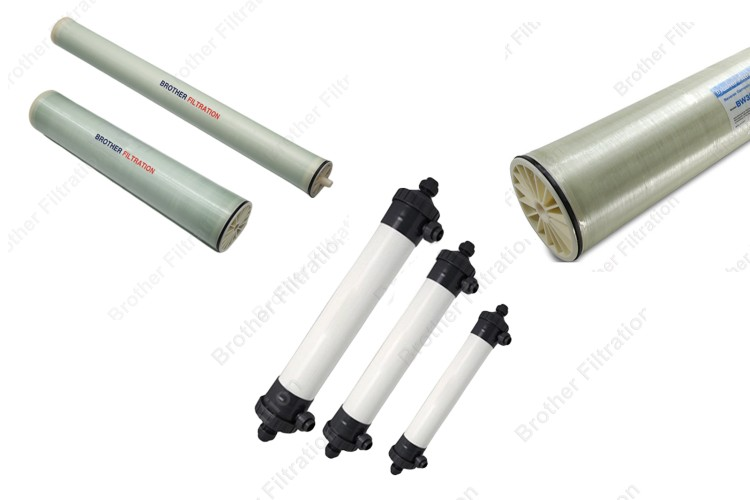
Once pretreatment is complete, reverse osmosis takes over. This stage pushes water through semi permeable membranes under pressure, removing dissolved salts, heavy metals, organic compounds, and microorganisms at a molecular level. A single pass RO system removes the majority of contaminants. Many biopharmaceutical facilities run double pass RO for even higher purity output before moving to the next stage.
Stage 3. Electrodeionization (EDI)
Electrodeionization follows reverse osmosis to remove the remaining dissolved ions that RO alone cannot fully eliminate. It uses electrically active membranes and ion exchange resins to continuously polish the water without the need for chemical regeneration. This stage is what takes your water from very clean to consistently ultra pure in a way that holds steady over time.
Stage 4. Ultrafiltration
At this point the water is chemically very pure but ultrafiltration adds biological protection. It removes endotoxins, pyrogens, viruses, and any remaining colloidal materials that have made it through the earlier stages. For biopharmaceutical applications where Water for Injection is required, this stage is not optional. Endotoxins in injectable products cause severe patient reactions and no amount of downstream processing fixes that problem once it occurs.
Stage 5. UV Sterilization
UV sterilization runs continuously through the distribution loop to prevent microbial regrowth inside the system itself. Bacteria do not just enter water treatment systems from the source. They grow inside distribution pipework, storage tanks, and connection points if the system is not actively controlled. UV sterilization at this stage keeps your entire loop biologically clean between production cycles.
Stage 6. Final Membrane Filtration
The last stage before water enters your production process is a sterilizing grade membrane filter, typically rated at 0.2 microns. This is your final checkpoint. It catches anything that has survived or entered the system after the earlier stages and ensures the water reaching your manufacturing process meets the exact purity standard your product requires.
Filter Types for the Pharmaceutical Industry
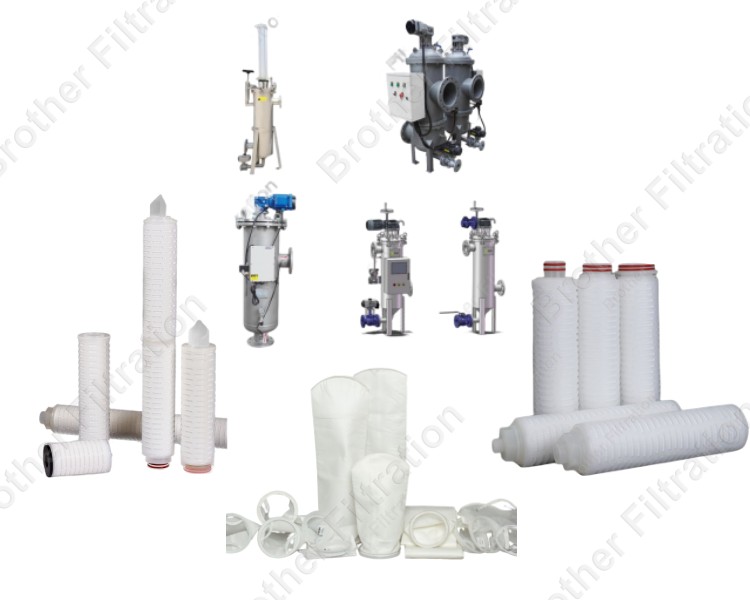
The pharmaceutical industry relies on a diverse array of filter types to ensure the quality and safety of its products. Selecting a filter involves considering various factors, particularly within the pharmaceutical sector. Different filters offer unique pros and cons, underscoring the importance of understanding their mechanisms before making a choice.
Depth Filter
Depth filters are commonly used for their ability to effectively remove particles and colloidal materials from various pharmaceutical fluids. Their capacity for high throughputs and their cost-effectiveness make them a popular choice.
Nanofiltration Membrane
Nanofiltration membranes utilize their intricate structure to separate contaminants at a molecular level. By allowing only water molecules to pass through, they ensure the purity and safety of the filtered substances.
Bag Filter
Bag filters are another essential component in pharmaceutical filtration, as they efficiently capture solid particles and impurities during the manufacturing process. Their versatility and ease of use make them a reliable option for many pharmaceutical applications.
Cartridge Filter
Cartridge filters are larger-scale filters used for the removal of particles, microorganisms, and other contaminants from liquids. They are typically used in the pharmaceutical industry for the filtration of large volumes of liquids during various stages of drug manufacturing.
Self-cleaning Filter
Self-cleaning filters offer automated maintenance capabilities, removing trapped particles at regular intervals without requiring manual intervention. This feature significantly reduces downtime and ensures consistent filtration efficiency.
Membrane Pleated Filter
Membrane pleated filters leverage their pleated membrane structure to effectively separate particles and microorganisms from liquids. Their high level of filtration efficiency and adaptability to various pharmaceutical applications make them a valuable asset in the industry.