


Industrial filtration is important because it removes contaminants from liquids and gases, protecting equipment, improving product quality, reducing maintenance costs, and ensuring reliable industrial operations. It plays a critical role in industries such as manufacturing, pharmaceuticals, food and beverage, power generation, and water treatment by improving efficiency and meeting regulatory standards.
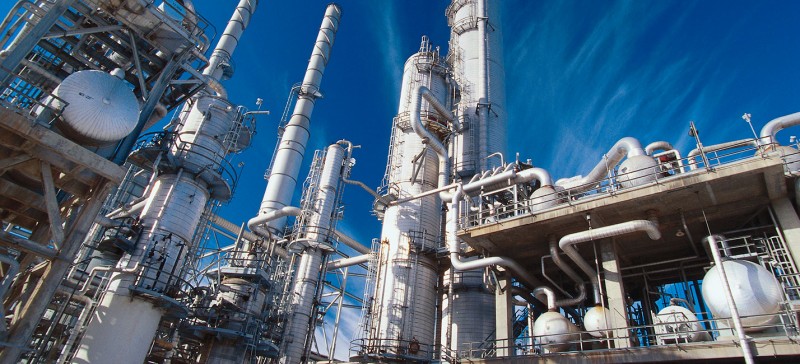
Industrial filtration is a critical step in industrial processes that is critical to many different fields and industries. It is used both to separate particles and substances from liquids and to extend the life of manufacturing equipment.
Filtration is a process that is very frequently applied in various industries. If you observe carefully, you can see that it is closely related to our production and life, such as water treatment, the chemical industry, pharmaceuticals, biotechnology, and food processing.
This article will introduce the different types of industrial filtration and discuss the factors that need to be considered when selecting a filtration system.
The different types of industrial filtration
Centrifugal filtration
It is a filtration method in which filtration is performed by the rotating motion of the filter body and can also be used to separate (and concentrate) contaminants suspended in a liquid medium. That is, filtration can be obtained without any arrangement of media.
At the speed specified by the equipment, high-density solids or liquids are separated from low-density fluids. This method is suitable for filtration of liquid or semi-liquid fluids.
Gravity Filtration
Gravity filtration is a method of filtering out impurities from a solution. It does this by using gravity to push the liquid through the filter. Gravity filtration is the preferred method for removing solid impurities from organic liquids.
In this filtration process, no separate medium is used, but gravity itself. Due to the pressure in the atmosphere, the flow of liquid from top to bottom helps to remove solids.
Vacuum filtration
Vacuum filtration is also known as negative pressure filtration, reduced pressure filtration, or suction filtration.
It is the removal of dust particles suspended in the atmosphere by suction or static pressure, which is the use of suction to create a static pressure in a container by which dust (and any other unwanted) particles are separated from usable materials.
Chill/Cold filtration
Cold filtration requires the liquid to pass through a set of cold filters to remove suspended particles, that is, to achieve cooling or cold filtration after maintaining the required lower temperature.
After maintaining the desired lower temperature, the fluid passes through the filter media to remove cooled suspended particles. This filtration helps to avoid precipitation of the filtrate during end use at lower temperatures.
Hot filtration
Hot filtration refers to dissolving a crystalline compound in a suitable solvent at a suitable high temperature, passing through a medium to remove impurities in the liquid compound, and cooling slowly to obtain a clear recrystallized compound.
Hot filtration can be used to remove small amounts of impurities from crystalline compounds.
Multi-layer filtration
Multi-layer filtration uses filter tanks to arrange gravels of different types and sizes to filter the avoidable particles between the arrangement spaces. This means that as the liquid flows through these layers, the layers of gravel and stones of different sizes help to filter out unwanted material as well as water, reaching a filter effect.

Mechanical Filtration
Mechanical filtration is a modern innovation, a filtration process performed by arranging the media within the main filter body to meet the requirements of industrial filtration with operating pressures above atmospheric pressure. Specifically, there are two different types – surface filtration and depth filtration.
Surface Filtration
Surface filtration uses an arrangement of media that acts as a barrier to unwanted particles, removing them from the primary fluid flow and sequestering these particles on the primary contact surface of the media. Surface filtration is a process commonly used in water filtration systems to remove particles from surfaces.
Depth Filtration
Depth filtration is arranged with media having a graded density structure, within which the separation and collection of different dust particles is achieved. It is a gradient density process where the media itself collects impurities of varying sizes to filter out key elements.
Factors to Consider When Selecting an Industrial Filtration System
From pharmaceutical processing to food manufacturing to wastewater treatment, there are numerous industries that use and benefit from filtration systems.
The selection of an industrial filtration system involves many different factors, such as the particle size of contaminants, the operating conditions of the system, the chemical compatibility of the system, and physical configuration.
The following are some more important factors, but not the only ones, the details still depend on the project situation.
-
Particle size
The choice of particle size depends on the size of the filter particles and whether it is organic or inorganic, and whether it meets the standards of the industry. Filter size is measured in microns, the smaller the micron rating, the faster it will clog.
-
Operating condition
Operating conditions such as temperature and pressure can influence the choice of filtration system. If the temperature of the liquid flowing through the system is higher than 140°F, a metal filtration system will be required instead of a plastic filtration system.Also, it is necessary to know the pressure limit of the filter.
-
Chemical Compatibility
Chemical compatibility is measured by the stability of two or more substances when mixed. When looking at the chemical compatibility of a filtration system, the compatibility of the liquid being filtered with the filter itself also needs to be looked at. Make sure they are compatible with the filter material to avoid damage to the filter.
-
Physical Configuration
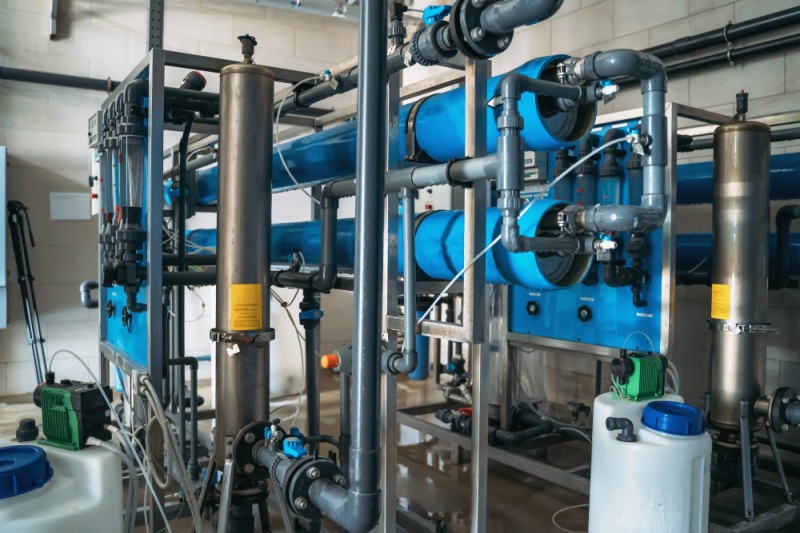
The physical configuration of filtration system housings comes in many different shapes and sizes. Options such as cartridge filters, single or multi-bag systems, and reverse osmosis systems are all available, but there are other physical constraints to consider.
The Importance of Industrial Filtration
Protect expensive industrial machinery from damage
Industrial filtration processes are very important to filter out particles from fluids and air to prevent wear and tear on equipment. The particles produced by abrasive wear are “work hardened”. These solid particles become harder than the original equipment surface and will recirculate causing additional wear if not removed by proper filtration.
Make the equipment run smoothly
Filtration systems also help keep components such as water, coolants, oils, and chemicals clean and free of contaminants to ensure product integrity and safety in manufacturing environments.
It protects process equipment while maximizing equipment uptime. The equipment runs smoothly, and the efficiency of industrial processes is greatly improved.
Helps to ensure a safe workplace for employees
Since most of the equipment such as filtration systems, chip handler systems etc. Those are automated, it means that these systems are capable of filtering the tiniest metal particles from other metallic or non-metallic components with little to no human effort.
This protects employees from exposure to highly contaminated and dangerous materials.
FAQ
Why is industrial filtration important for manufacturing efficiency?
It removes contaminants that cause downtime, equipment wear, and product defects, keeping production lines running at consistent output.
How does industrial filtration affect machinery lifespan?
Clean fluids and air reduce friction, corrosion, and particulate buildup in moving parts, extending equipment life and cutting maintenance costs.
Is industrial filtration worth the investment for small plants?
Yes. Filtration costs are typically far lower than the cost of unplanned downtime, equipment repairs, or failed product batches.
Can better filtration reduce industrial energy bills?
Yes. Clogged filters and dirty fluids force pumps, compressors, and HVAC systems to work harder, so proper filtration lowers energy consumption.
How does industrial filtration impact employee health and safety?
It removes airborne particulates, fumes, and mist from the workplace, reducing respiratory hazards and exposure to harmful substances.
What are the legal requirements for industrial air filtration?
Requirements vary by country and industry but generally follow OSHA (US), EU air quality directives, or equivalent local regulations on airborne contaminant limits.
Difference between HEPA and ULPA filters in industrial settings?
HEPA filters capture 99.97% of particles at 0.3 microns; ULPA filters capture 99.999% at 0.12 microns, making ULPA the choice for stricter cleanroom or semiconductor environments.
Conclusion
In summary, industrial filtration can help to remove contaminants from the air, water, and gases used in industrial settings. This in turn helps protect workers from these pollutants, which can cause serious health problems.
Additionally, industrial filtration can help improve product quality by removing contaminants that can cause defects.
Brother Filtration has been deeply involved in the filtration area for many years, and designs and manufactures all kinds of filter products, fulfilling various filtration needs. If you have any further problems with industrial filtration, please feel free to contact us.
relevant products


Subscribe to our blog newsletter
Get the best, coolest and latest delivered to your inbox each week
[newsletter_form]