


Polypropylene is the better filter material for most chemical jobs. It resists more chemicals, costs less, and does not rust. Stainless steel is the better choice only when the process runs very hot or needs steam cleaning. That is the short answer to the polypropylene vs stainless steel filter chemical question.
Now here is why this choice matters. Pick the wrong filter material and you do not just waste money. You get a filter that rusts in months, a batch of product that gets ruined, or a plant that shuts down to fix the problem. This guide breaks down both materials side by side, in plain language, so you can pick the right one the first time.
At BOLEFIL, we build both polypropylene and stainless steel filters, and we have seen what happens when the wrong one gets used in a chemical line. This guide shares what we have learned, so you do not have to learn it the hard way.
What Each Filter Material Actually Is
Before comparing the two, it helps to know what each one is made of and how it is built.
Polypropylene Filters: Plastic Built to Resist Chemicals
Polypropylene is a tough plastic. Factories shape it using heat, in one of two main ways. The first way is called melt-blown, where melted plastic fibers are blown onto a surface to build a thick, porous filter. The second way is called pleated, where a flat sheet of filter material is folded like a fan to fit more surface area into a small space.
You will find polypropylene in cartridge filters, filter bags, pleated filters, and string wound filters. Browse the full range of industrial cartridge filter types BOLEFIL makes for chemical and water lines. The biggest plus of polypropylene is that it resists rust and chemical attack right out of the box. It needs no coating and no special treatment.
Stainless Steel Filters: Metal Built for Strength and Heat
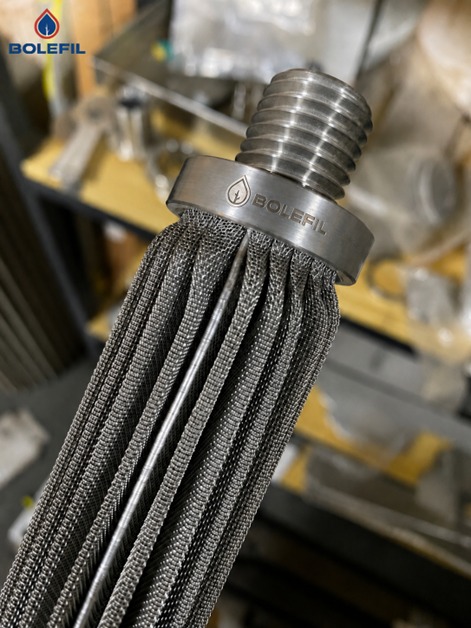
Stainless steel is a metal made mostly of iron, chromium, and carbon. In filters, the two grades you will see most are 304 and 316. Grade 304 works fine for mild jobs. Grade 316 has extra molybdenum added, which gives it better protection against salty or mildly acidic conditions.
Stainless steel filters come as mesh filters, baskets, and cartridge housings. BOLEFIL industrial filter housing range covers both stainless and other build materials. Stainless steel is known for two things above all else: it does not bend easily, and it handles high heat without melting or warping.
Polypropylene vs Stainless Steel Filter Chemical: 6 Factors Compared
Here are the six things that matter most when picking between these two materials for chemical filtering.
| S.N | Factor | Polypropylene | Stainless Steel 304/316 | Winner |
| 1 | Chemical Resistance | Resists roughly 79% of common industrial chemicals. Handles hydrochloric acid, most alkalis, and many solvents without surface damage. Stayed fully intact in lab tests after long exposure to 37% hydrochloric acid. | Resists only about 52% of the same chemicals, even at the stronger 316 grade. The main weak spot is chloride (found in table salt, hydrochloric acid, seawater, plant cleaning chemicals), which causes pitting. Grade 316 has shown visible pitting in as little as 6 months in chloride-rich plants. | Polypropylene clear margin in chemical environments |
| 2 | Heat Resistance | Rated for steady use up to 70°C–80°C. Above this, it softens, loses shape, and lets particles through. Heat limit is not a real issue since most liquid chemical filtering runs well below 70°C. | Handles heat above 200°C and survives steam cleaning / autoclaving critical for pharma and food plants that sterilize with steam. | Stainless steel for high-heat and steam jobs |
| 3 | Cost Over One Year | Costs 20%–30% less than the same stainless steel part. No cleaning chemical cost or labor cost filters are swapped, not cleaned. Lower total cost of ownership over a full year. | Often needs passivation (rust-resisting chemical treatment) plus special coatings in tough chemical settings, adding cost. Replacement after chloride corrosion costs more than a planned swap. | Polypropylene on unit price and total cost |
| 4 | Toughness & Impact Resistance | Much lighter, easier to install (especially overhead). More sensitive to hard impacts. Single-moulded parts have no welded joints, removing a common failure point. | Handles pressure spikes, rough handling, and knocks without bending. Better for environments with frequent handling or pressure surges. Welded joints are common, usually the first spot corrosion/cracking starts in chemical lines. | Stainless steel (raw toughness) / Polypropylene (avoids weld-point corrosion) |
| 5 | Maintenance & Lifespan | Replaced on a schedule with no cleaning cycle, so no risk of leftover cleaning chemicals contaminating the next batch. Low effort overall. | Needs regular checks for pitting and cleaning with chemicals matched to both metal and product. Failed weld joints need repair, causing downtime. | Polypropylene lower effort, lower contamination risk |
| 6 | Safety & Food/Pharma Use | Food-grade polypropylene (PP-H) is safe for food, drinking water, and medicine contact. Does not leak chemicals into the liquid. Available in USP Class VI certified versions. | Food-safe once polished and passivated. Top pick wherever steam cleaning is required (e.g., dairy, brewing). Also available in USP Class VI certified versions. | Tie both meet strict standards, suited to different use cases |
Which Filter Works Best in Your Industry
The right material is not the same for every plant. Here is how the choice plays out across common industries.
Water Treatment and Wastewater Plants
Water and wastewater plants deal with ammonia, methane, phosphorus, and other harsh chemicals daily. Polypropylene is the standard choice for dosing systems and filter stages here because it shrugs off this mix without needing coatings. See the full wastewater treatment process and the related guide to filtration systems for wastewater applications for more detail.
Chemical and Industrial Processing
Polypropylene cartridges are used as pre-filters before membrane systems, as guards on dosing pumps, and as final polish filters. Stainless steel still has a place for housings and structural parts where heat is high and chlorides are absent. Read more in the role of filtration in the chemical industry.
Pharmaceutical and Lab Settings
Polypropylene handles pre-filtering, solvent filtering, and water purifying steps in drug manufacturing. It does not react with or contaminate the product, which is why labs trust it for consistent results, including after long exposure to strong acids.
Food and Beverage Production
Polypropylene is the standard pre-filter in reverse osmosis systems and bottled water lines. Stainless steel is preferred wherever steam cleaning is required, such as dairy and some brewing lines. See water filtration in the food and beverage industry for examples.
Desalination Plants
Seawater is loaded with chlorides, which is about the worst possible condition for stainless steel. Polypropylene melt-blown and string wound cartridges are the standard pre-filter choice here, protecting reverse osmosis membranes from sediment damage. See filtration for seawater desalination for the full process.
When Stainless Steel Is Still the Right Call
A fair comparison has to admit where stainless steel wins. Choose it when any of these apply to your process:
- Your process runs above 80°C on a steady basis.
- Your system needs steam sterilization or autoclaving.
- Workers handle the filter parts often, or the line sees pressure surges.
- The fluid is free of chlorides and acids, and you want a part that lasts years through reuse.
For a broader checklist that applies beyond just chemical lines, see 10 tips to choose the best filters.
What It Really Costs to Pick the Wrong Material
This is the part most filter guides skip, but it is often the most useful one.
Here is what happens when stainless steel goes into a chloride-heavy line. Small pits form on the surface. They grow. Bits of corroded metal can end up in the filtered product. If that product is food or medicine, the whole batch may need to be thrown out. The plant then stops to inspect and replace the filter system, and emergency parts usually cost more than parts ordered ahead of time.
Here is what happens when polypropylene runs too hot for too long. The filter media softens. The pore structure shifts, so particles that should be caught start slipping through. The product looks fine from the outside, but it may fail a quality test later.
The fix is the same in both cases: match the material to your real operating conditions before you order. Check chemical compatibility, confirm your running temperature, and confirm whether sterilization is needed. Get those three right and you avoid this whole chain of problems. If you are not sure when your current filters need attention, see when to change your filter cartridge.
Frequently Asked Questions
Is polypropylene better than stainless steel for chemical filtration?
For most chemical jobs, yes. Polypropylene resists about 79% of common industrial chemicals, against about 52% for stainless steel. It also costs less and needs less upkeep. Stainless steel is the better pick when the process runs above 80°C or needs steam sterilization.
Are polypropylene filters safe to use in chemical processes?
Yes. Polypropylene does not react with most acids, alkalis, and solvents, and it does not release harmful substances into the liquid passing through it. This is why it is approved for use in pharmaceutical, food-grade, and drinking water systems. Always confirm compatibility with strong solvents before specifying.
What are the main downsides of polypropylene filters?
The main limits are a lower heat ceiling (about 70-80°C), softer impact resistance than metal, and limited reuse compared to stainless steel. It also cannot handle steam sterilization.
Where are polypropylene filters most commonly used?
Water treatment, wastewater, chemical processing, pharmaceutical manufacturing, food and beverage production, desalination, and lab settings all rely on polypropylene because of how many chemicals it can safely handle.
Can stainless steel filters rust or corrode in chemical use?
Yes, more often than many buyers expect. Even grade 316 stainless steel can pit when chlorides are present, including from hydrochloric acid, seawater, or cleaning salts. Pitting has shown up in as little as six months in chloride-heavy settings. Polypropylene is the usual fix for this problem.
At what temperature does a polypropylene filter lose its shape?
Polypropylene starts to soften above roughly 70-80°C of steady use. Below that range, it performs reliably. Above it, filtration performance drops because the pore structure changes.
What is the difference between a string wound filter and a polypropylene filter?
A string wound filter is a build style, made by winding yarn around a core. That yarn can be polypropylene, cotton, polyester, or another material. A polypropylene filter usually refers to a melt-blown or pleated cartridge made from polypropylene media. Melt-blown polypropylene typically filters more consistently, often above 98% efficiency, with less fiber shedding into the product.
Is polypropylene more chemically resistant than stainless steel?
Yes, based on standard chemical resistance data. Polypropylene handles around 79% of common industrial chemicals well, against about 52% for stainless steel 316. The gap is largest with chlorides and hydrochloric acid.
Does polypropylene break down in strong acids?
It depends on the acid. Polypropylene holds up well against hydrochloric acid up to 37% and most sulfuric acid at lower concentrations. Very strong oxidizing acids, like concentrated nitric acid, can affect it over time. Always check compatibility with your supplier for extreme acid levels.
So, Which Filter Should You Choose?
If your line deals with aggressive chemicals, chlorides, acids, wastewater, or chemical dosing, polypropylene is almost always the smarter material. It resists more chemicals, costs less, and avoids the pitting that ends stainless steel’s life early in these conditions.
If your line runs hot, needs steam sterilization, or takes heavy mechanical wear with mild chemicals, stainless steel earns its higher price.
The goal is not to pick the material that sounds stronger. The goal is to match the material to your actual process. Get that right, and your filter will do its job reliably for as long as it should.
BOLEFIL has supplied chemical-resistant filtration to plants in 79+ countries since 2010, with ISO 9001, EU PED, and FDA AAA certified products. Our team can match the right filter material to your exact process conditions, free of charge, before you order anything.