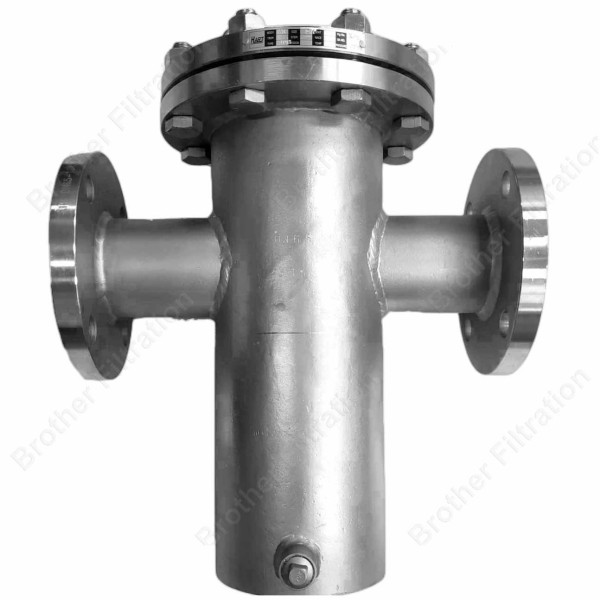
Industrial strainers and filters remove particles from liquids or gases. The main difference is the size of the particles they capture. Strainers remove larger, visible particles, while filters target finer particles that are too small to see.
Filtration in industry involves separating solids from fluids to improve downstream processes. Some applications clearly require a “coarse” (strainer) or “fine” (filter) solution. However, there are cases where either option could work. This article outlines key factors to help guide your decision.
What is a Filter?
A filter is a device or medium used to remove unwanted particles, contaminants, or impurities from liquids or gases. It works by trapping these elements while allowing the desired substance to pass through. Filters can target a wide range of impurities, from visible debris to microscopic particles.
Filters are essential components in many systems and processes, designed to separate, purify, and improve the quality of fluids by eliminating undesirable particles and contaminants. Common types of filters include mechanical filters, which physically block particles, and chemical filters, which absorb or react with contaminants.
Function
Filters primarily purify or separate substances to meet quality, safety, and operational needs. They also protect downstream equipment and improve process efficiency. Filters help ensure reliable operations and high-quality end products.
Common Applications
- Water Treatment: Removing sediments, microorganisms, and impurities from water for safe consumption or industrial use.
- Industrial Processes: Ensuring fluid cleanliness to protect equipment and maintain operational efficiency.
- Oil and fuel filtration: Protecting machinery by eliminating contaminants from lubricants and fuels.
- Automotive: Filtering air, oil, and fuel to prevent engine damage and improve performance.
- Pharmaceuticals: Ensuring sterility and purity in drug manufacturing processes.
- Food & Beverage: Enhancing product quality by removing unwanted particles from liquids like milk, wine, or juices.
Key Features
Filters are engineered to meet the specific needs of various industries, ensuring optimal filtration and system functionality. Here are the key features that define the effectiveness and suitability of a filter:
- Efficiency: Ability to capture particles of specific sizes.
- Material: Ranges from polypropylene to stainless steel, depending on the application.
- Compatibility: Adaptable to different systems and operating conditions.
- Durability: Designed to withstand pressure, temperature, and chemical exposure.
What is a Strainer?
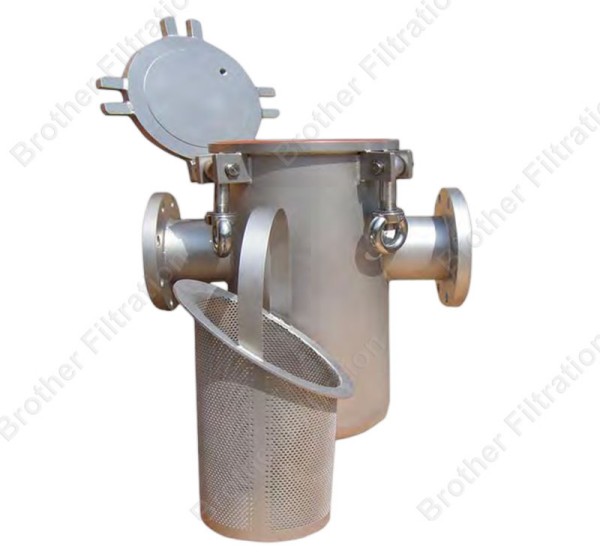
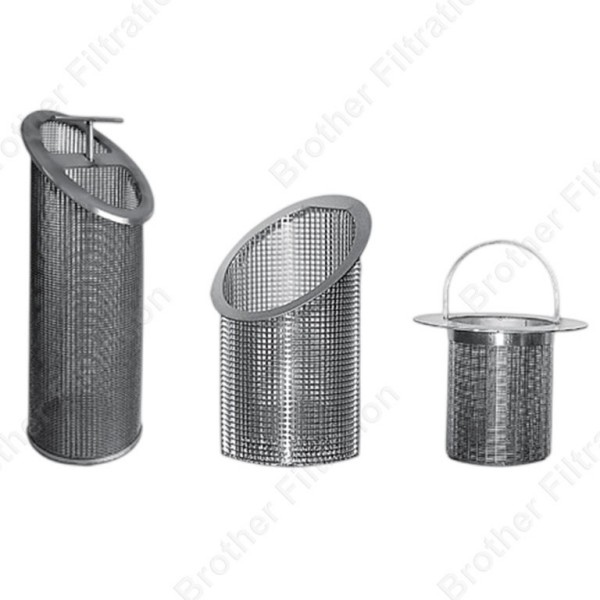
A strainer is a device used to remove larger particles or debris from liquids or gases. It typically works by allowing the substance to pass through a mesh or perforated material, capturing larger solids in the process. Strainers are often used as a first line of defense to prevent damage to more sensitive equipment, such as pumps and valves, by filtering out larger contaminants.
Function
The primary function of a strainer is to protect downstream equipment from larger debris or particulate matter that could cause blockages or damage. By ensuring that only clean liquids or gases flow through a system, strainers help maintain operational efficiency and reduce the risk of system failure. They also help improve the lifespan of expensive machinery by preventing clogging.
Common Applications
Strainers are widely used in a variety of industries and applications, including:
- Pump Systems: Protects pumps by removing larger particles before they can enter and damage the pump mechanism.
- Pipeline Maintenance: Ensures the smooth flow of liquids or gases by preventing debris from accumulating in pipelines and causing blockages.
- Wastewater Treatment: Removes larger solids from wastewater, ensuring that finer filtration systems can operate effectively.
- Industrial Processes: Used in various systems to keep equipment clean and efficient by filtering out debris that could disrupt processes.
Understanding Pressure Drop: What to Expect from Strainers and Filters
Pressure drop (differential pressure or ΔP) is the loss in fluid pressure as it passes through a strainer or filter element. Every device creates some resistance; the question is how much is acceptable for your system, and at what ΔP the device should be serviced or replaced.
Key Factors That Affect Pressure Drop
- Flow rate – higher flow increases ΔP proportionally
- Fluid viscosity – thicker fluids (oils, glycols) create significantly higher ΔP than water
- Contaminant loading – as particles accumulate, ΔP rises steadily until the element is cleaned or replaced
- Micron rating – finer-rated elements generate higher initial ΔP than coarse elements at the same flow
- Element area – high-flow cartridges and oversized basket strainers offer larger media area, reducing ΔP
Typical Clean ΔP by Device (water at rated flow, indicative values):
| Device |
Clean ΔP (bar) * |
Clean ΔP (psi) * |
Flow Restriction |
Recommended Change-Out Trigger |
| Y-Strainer (clean) |
0.05 – 0.15 |
0.3 – 1.0 |
Low |
Replace / clean when ΔP doubles from clean baseline |
| Basket Strainer (clean) |
0.03 – 0.10 |
0.2 – 0.7 |
Very Low |
Monitor differential; clean at 0.5–1.0 bar rise |
| Bag Filter |
0.02 – 0.05 |
0.1 – 0.3 |
Low |
Replace bag at ΔP ≥ 1.0 bar or per schedule |
| Depth Cartridge Filter |
0.05 – 0.20 |
0.3 – 1.4 |
Low – Medium |
Replace cartridge at ΔP ≥ 2.5 bar (industry rule of thumb) |
| Pleated Cartridge Filter |
0.03 – 0.10 |
0.2 – 0.7 |
Low |
Replace at ΔP ≥ 2.0 bar or at 80% of rated ΔP |
| Membrane Cartridge |
0.05 – 0.30 |
0.3 – 2.1 |
Medium |
Replace at ΔP ≥ 3.0 bar or flux decline > 20% |
Material Compatibility: Choosing the Right Housing and Element Material
The material of both the filter housing and the filter element must be compatible with your process fluid, operating temperature, and pressure. Selecting the wrong material risks chemical degradation, contamination of the product stream, or catastrophic housing failure. The chart below covers the most commonly specified materials across industrial filtration.
| Material |
Max Operating Temp. |
Chemical Resistance |
Pressure Rating |
Best Suited For |
| 316L Stainless Steel |
Up to 260°C (500°F) |
Excellent – acids, alkalis, solvents |
High (up to 150 bar+) |
Pharma, food & beverage, chemicals, high-purity water |
| 304 Stainless Steel |
Up to 260°C (500°F) |
Good – mild acids & alkalis; less chloride resistant than 316L |
High |
General industrial, water treatment, HVAC |
| Carbon Steel |
Up to 425°C (800°F) |
Limited – susceptible to oxidation & corrosion; requires coating |
Very High |
Oil & gas, steam systems, high-pressure pipelines |
| Polypropylene (PP) |
Up to 80°C (176°F) |
Very Good – acids, alkalis, alcohols; not for aromatic/halogenated solvents |
Medium (up to 10 bar) |
Water treatment, food & beverage, mild chemical dosing |
| PVDF |
Up to 135°C (275°F) |
Excellent – broad chemical resistance including halogens |
Medium – High |
Semiconductor, ultrapure water, aggressive chemicals |
| Hastelloy C-276 |
Up to 1040°C (1900°F) |
Exceptional – strong oxidizers, wet chlorine, HCl |
Very High |
Petrochemical, offshore, highly corrosive duty |
How are a strainer and Filter Similar?
Filters and strainers have some differences, but they also share many similarities. This can make it difficult for beginners to distinguish between them. Both are designed to remove suspended particles from liquids and gases, often leading to confusion when choosing the right one.
Both filters and strainers remove fine particles, protect downstream equipment, and prevent contaminants from affecting product quality. This makes them common choices in industrial production, ensuring high-quality, impurity-free products.
Additionally, both filters and strainers can feature a duplex design. While one unit is being cleaned, the other continues to operate, preventing production downtime.
Despite their similarities, filters and strainers are not interchangeable. Each device serves a specific function, offering benefits that the other cannot provide.
Key Differences Between Filters and Strainers
Here’s a quick comparison to help you understand the key differences between filters and strainers:
|
Filter |
Strainer |
| Functionality |
Traps valuable substances and lets waste pass through |
Traps debris and allows valuable liquid to flow through |
| Number of Screens |
Incorporates a single screen |
Incorporates various screens |
| Re-usability |
Screen must be replaced once clogged |
Screens can be cleaned and reused |
| Type of Operation |
More delicate removal process |
Coarse operation |
| Basic Usage |
Used to remove small particles, even down to microbes |
Employed to catch large chunks in valve systems |
| Pressure Drop |
Experiences a pressure drop as liquid or gas passes through |
No significant pressure drop |
| Size of Particles |
Removes particles smaller than 40 microns |
Removes particles larger than 40 microns |
| Quick Cleaning |
Requires more time for cleaning |
Can be cleaned quickly with minimal downtime |
Maintenance Frequency & Total Cost of Ownership Comparison
Choosing between a strainer and a filter is not just a particle-size decision, it directly affects your maintenance schedule and operating budget. Strainers are reusable and require periodic cleaning; filters typically require cartridge or element replacement. The table below provides typical service intervals across common devices.
| Device Type |
Typical Service Interval |
Maintenance Action |
Ongoing Cost |
Ease of Maintenance |
| Y-Strainer |
Weekly – Monthly |
Manual backflush / remove basket |
Low – reusable screen |
High (quick-open cover) |
| Basket Strainer |
Weekly – Monthly |
Remove & rinse basket |
Low – reusable basket |
High |
| Duplex Strainer |
No downtime needed |
Switch to standby side, clean offline |
Low |
Very High (continuous flow) |
| Bag Filter |
Every 1–4 weeks * |
Replace filter bag |
Medium – bag cost |
Moderate |
| Depth Cartridge Filter |
Every 1–6 months * |
Replace cartridge |
Medium – High |
Moderate |
| Pleated Cartridge Filter |
Every 3–12 months * |
Replace cartridge |
Medium – High |
Moderate |
| Membrane Filter |
Every 6–24 months * |
Replace membrane element |
High |
Lower (controlled environment needed) |
| High-Flow Cartridge |
Every 3–6 months * |
Replace large-format cartridge |
Medium |
High (fewer change-outs vs standard) |
Types of Filters and Strainers
Filters are widely used across various industries, each with distinct requirements for purity and fluid integrity. For instance, the pharmaceutical industry utilizes filters to ensure the sterility and purity of medicines. In the water treatment sector, multi-stage filtration is employed to remove particles, sediments, and pathogens from water.
Common types of filters include:
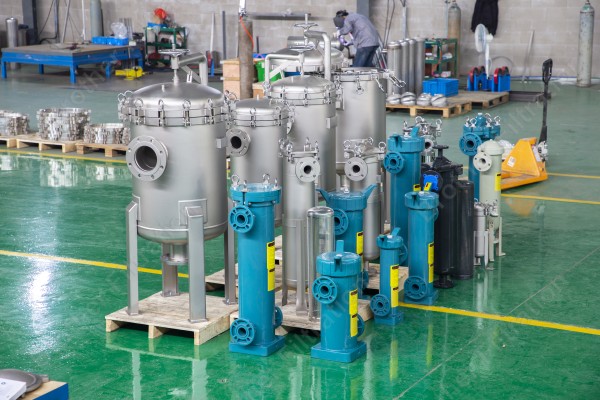
- Bag Filters: Use a bag-shaped medium to capture particles, suitable for high flow rates and handling large volumes of contaminants.
- Cartridge Filters: Consist of a cylindrical housing with a replaceable cartridge made from porous materials like pleated paper or plastic.
- Membrane Filters: Utilize a thin, semi-permeable membrane to separate particles by size, ideal for fine filtration processes across various industries.
- Activated Carbon Filters: Use activated carbon to adsorb impurities, effectively removing chlorine, organic compounds, and odors.
- Coalescer Filters: Designed to separate oil or water from fluids, valuable in applications requiring liquid phase separation.
Strainers are available in different configurations to suit various applications. Simplex strainers require system shutdown for cleaning, while duplex strainers enable continuous operation, and Y-strainers effectively protect downstream equipment in low-solids systems.
Common types of strainers include:
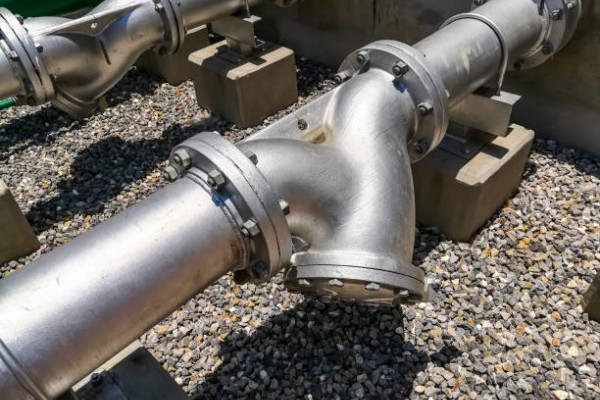
- Y-Strainers: Y-shaped, used in pipelines to filter debris and protect equipment. Ideal for low solids in liquid or gas systems.
- T-Strainers: T-shaped, suited for higher flow rates or angled installations.
- Basket Strainers: Cylindrical with a removable basket, designed for high flow and large debris.
- Cone Strainers: Cone-shaped, used in high-flow or space-limited systems, common in oil and gas.
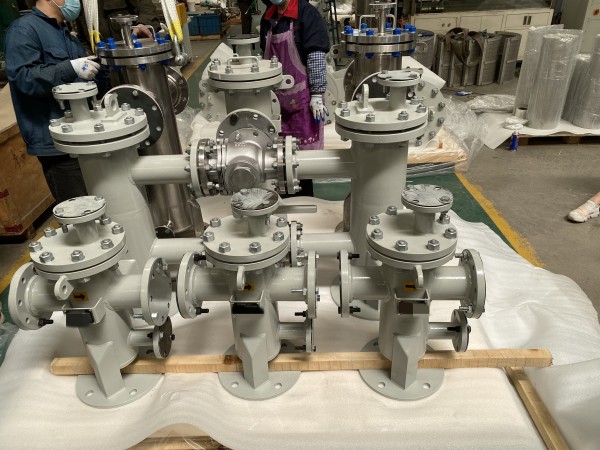
- Duplex Strainers: Two parallel bodies with a valve for continuous operation during maintenance.
- Inline Strainers: Installed in flow lines to remove debris without disrupting flow.
Factors to Consider When Choosing a Strainer or a Filter
When selecting the right strainer or filter, several factors must be considered to ensure optimal performance. First, the device should be able to handle the required flow rate without causing significant pressure drops that could affect system efficiency. The type and size of particles being filtered will determine whether a fine filter or a coarser strainer is needed for the application.
Maintenance needs should be considered as well, including how easy it is to clean or replace parts. Systems that allow continuous operation, such as duplex strainers, can help minimize downtime. The device must operate effectively under the specific temperature, pressure, and environmental conditions of your application.
Finally, ensure the strainer or filter fits well within the pipeline’s size and layout. This helps maintain smooth flow and prevents inefficiencies in the system, contributing to long-term performance and reduced wear on downstream equipment.
Strainer vs Filter Selection Matrix: Choose by Particle Size
The single most reliable selection criterion is particle size. Use the matrix below to identify the right device for your application based on the contaminant you need to remove. Where ranges overlap, consider using a strainer upstream as a pre-filter to extend the service life of the downstream filter.
| Particle Size Range |
Typical Contaminant |
Recommended Device |
Typical Application |
| > 1,000 µm (1 mm+) |
Pipe scale, weld slag, large debris |
Strainer (Coarse) |
Pipeline commissioning, pump protection |
| 500 – 1,000 µm |
Sand, rust flakes, coarse sediment |
Strainer (Coarse) |
Cooling water intake, raw water systems |
| 200 – 500 µm |
Fine sand, metal fines |
Strainer (Medium mesh) |
HVAC, steam systems, pre-filtration |
| 75 – 200 µm |
Silt, fine particulate |
Strainer (Fine mesh) or Bag Filter |
Industrial process water, boiler feed |
| 10 – 75 µm |
Dirt, clay, fine silt |
Depth Filter / Bag Filter |
General industrial filtration |
| 1 – 10 µm |
Bacteria (large), fine particles |
Cartridge Filter (depth or pleated) |
Food & beverage, chemical processing |
| 0.1 – 1 µm |
Fine bacteria, colloids |
Membrane Cartridge Filter |
Pharmaceutical, electronics, drinking water |
| < 0.1 µm (100 nm) |
Viruses, endotoxins |
UF / NF Membrane |
Biotech, high-purity water, sterile filtration |
Industry Application Guide: Particle Size Targets and Regulatory Standards
Different industries operate under specific cleanliness standards and regulatory requirements that determine exactly which filtration solution is required. The table below maps common industrial applications to their target particle size, the appropriate Brother Filtration solution, and the relevant industry standard or regulation.
| Industry Application |
Target Particle Size |
Brother Filtration Solution |
Relevant Standard / Regulation |
| Pharmaceutical (sterile filtration) |
0.1 – 0.22 µm |
Membrane cartridge filter (PES or PTFE) |
21 CFR Part 210/211; USP <1229> |
| Food & Beverage (wine clarification) |
0.45 – 1.0 µm |
Membrane pleated cartridge |
FDA 21 CFR; NSF/ANSI 61 |
| Semiconductor / Ultrapure Water |
< 0.05 µm |
UF membrane + polishing cartridge |
SEMI F57; ASTM D5127 |
| Industrial Cooling Water |
50 – 200 µm |
Y-strainer or basket strainer (pre-filter) |
ISO 16889 (multi-pass test) |
| Petrochemical (lube oil) |
10 – 25 µm |
Depth cartridge or pleated filter |
ISO 4406 cleanliness codes |
| Municipal Water Treatment |
1 – 5 µm (pre-RO) |
Cartridge depth filter |
NSF/ANSI 42 / 58; WHO guidelines |
Conclusion
Choosing the right filter or strainer not only ensures optimal system performance but also protects downstream equipment from damage caused by contaminants, reducing maintenance and extending machinery lifespan.
Rely on Brother Filtration’s expert guidance to select the ideal solution for your specific application and safeguard the efficiency and reliability of your operations. Contact us today to find the perfect fit for your needs![/vc_column_text][/vc_column][/vc_row]
Frequently Asked Questions
What micron rating separates a strainer from a filter?
Industry convention places the boundary at approximately 75 microns (200 mesh). Devices that capture particles larger than 75 µm are generally classified as strainers; anything rated finer than 75 µm – down to sub-micron, falls in filter territory. This is a practical guideline, not a regulatory definition, so overlap exists between 50–100 µm depending on the manufacturer.
Can I use a strainer instead of a filter to save cost?
Only if your process tolerates particles below the strainer’s mesh rating. For coarse protection of pumps and valves, a strainer is cost-effective and sufficient. However, for applications requiring fluid purity, such as pharmaceutical manufacturing, food-grade processing, or semiconductor fabrication, a strainer alone cannot meet the required cleanliness levels. Using a strainer upstream of a filter is common practice to extend filter life.
What is the typical pressure drop across a clean cartridge filter?
A clean standard cartridge filter typically shows a pressure drop of 0.05–0.20 bar (0.7–2.9 psi) at rated flow. High-flow cartridges are designed for lower differential pressure, often under 0.10 bar clean. Most manufacturers recommend replacing a cartridge when differential pressure reaches 2.0–2.5 bar above its clean baseline, regardless of the scheduled maintenance interval.
How do I choose between stainless steel and polypropylene housing?
Choose stainless steel (304 or 316L) when operating above 80°C, handling aggressive chemicals, or working in food, pharma, or high-pressure environments. Polypropylene is suitable for ambient-temperature water treatment and mild chemical service where metal contamination must be avoided, and it offers a lower upfront cost. Always verify chemical compatibility against the specific fluid’s pH, temperature, and solvent content before specifying housing material.
How often should industrial filter cartridges be replaced?
Replacement frequency depends on contaminant load, flow rate, and acceptable differential pressure. As a general guideline: depth cartridges in moderate-duty service last 1–6 months; pleated membrane cartridges in polished-water service can last 6–12 months. The most reliable trigger is a differential pressure gauge, replace when ΔP reaches the manufacturer’s maximum rated value, typically 2.5–3.5 bar. Time-based replacement schedules should be treated as a maximum, not a guarantee of service life.
What is the difference between surface filtration and depth filtration?
Surface filtration (e.g., mesh strainers, pleated membrane cartridges) captures particles on the outer surface of the media. It offers sharp cut-off at a defined rating and is easy to clean or backflush. Depth filtration (e.g., melt-blown or wound cartridges) traps particles throughout the thickness of the media, providing high dirt-holding capacity and gradual loading. For high-sediment fluids, depth filters last longer between changes; for precise particle cut-off, surface/membrane filters are preferred.